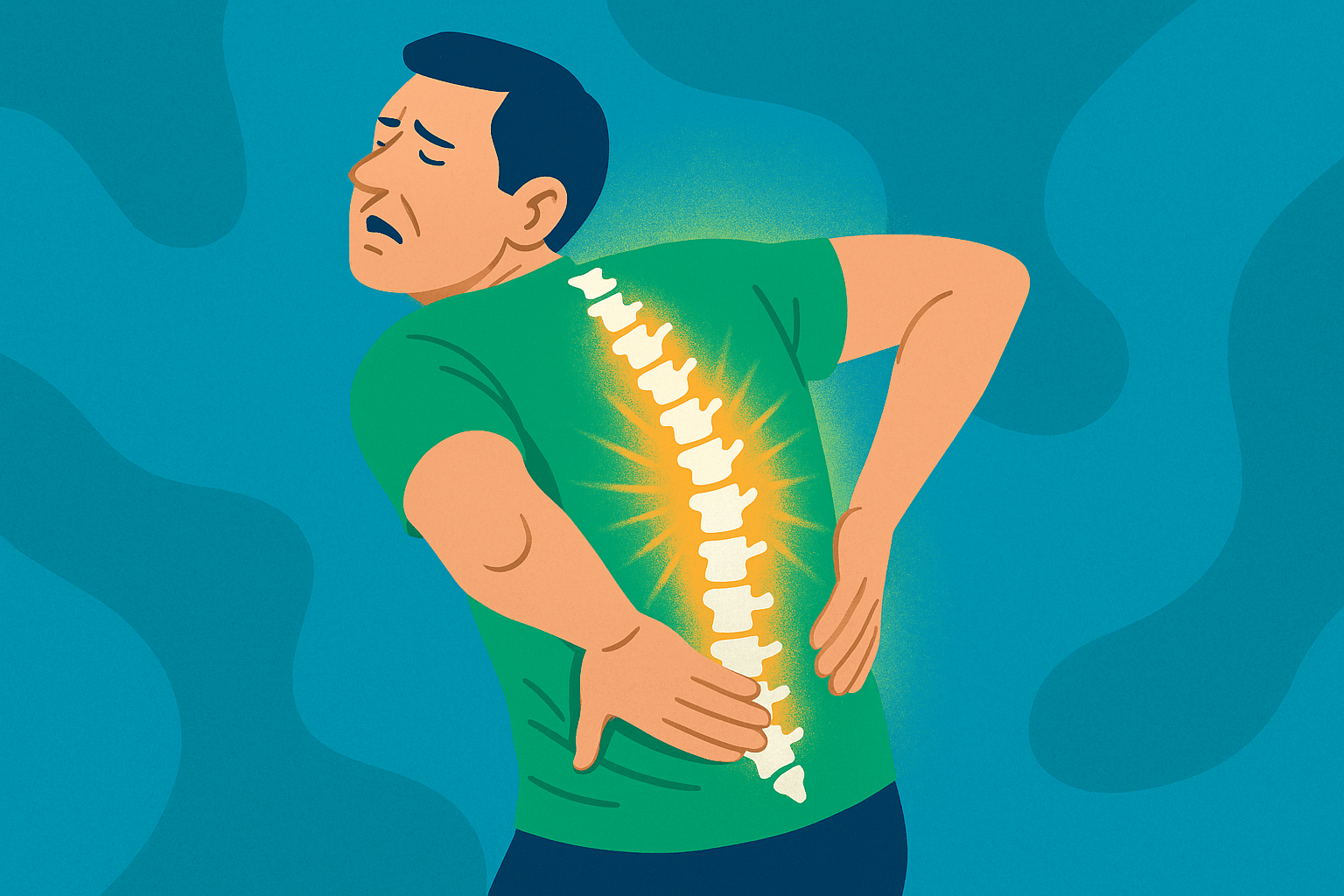
The Neck and Head Are Closely Connected
Your neck does considerably more than hold up your head. It contains joints, muscles, nerves, connective tissues, and other structures that work together to support and move the head while protecting important neurological structures.
Pain originating from the upper cervical region can sometimes be perceived elsewhere, including areas of the head. This is known as referred pain.
That helps explain why some people experience a headache alongside neck pain or stiffness.
But there is an important distinction to make.
Having neck discomfort during a headache does not necessarily mean the neck caused the headache. Migraine, for example, can include neck pain or stiffness as part of the headache experience.
The useful question is therefore not simply whether your neck hurts. It is whether the overall pattern suggests that neck function could be contributing to your symptoms.
People experiencing both problems can learn more about assessment approaches for neck pain while remembering that persistent or unexplained headaches may also require medical evaluation.
Jump To:
- TLDR Quick Guide
- How Can Neck Problems Cause Headaches?
- What Is a Cervicogenic Headache?
- Where Does a Neck-Related Headache Usually Hurt?
- Does Pain at the Base of the Skull Come From the Neck?
- Can Neck Stiffness Be a Sign?
- Can Turning Your Head Trigger a Headache?
- Can Poor Posture Cause Headaches?
- Why Desk Work Can Aggravate the Neck
- Does Looking Down at a Phone Affect the Neck?
- Can Tight Neck Muscles Cause Headaches?
- What Is the Difference Between a Neck-Related Headache and a Migraine?
- What About Tension-Type Headaches?
- Can an Old Neck Injury Be Relevant?
- Can Jaw Problems and Neck Tension Occur Together?
- Why Headache Patterns Matter
- Does Your Headache Always Start After the Same Activity?
- Should You Stretch Your Neck When You Have a Headache?
- Can Strengthening Help?
- How Is a Neck-Related Headache Assessed?
- How Upright Posture Approaches Structural Assessment
- Why a "Perfect Posture" Is Not the Goal
- When Should You See a Healthcare Professional?
- When Is a Headache an Emergency?
- How Can You Reduce Neck-Related Triggers During the Day?
- What Should You Do If Headaches Keep Returning?
- Key Takeaways
- FAQs
TLDR Quick Guide
Signs Worth Paying Attention To
- Certain neck problems can cause pain that is felt in the head.
- A recognised example is cervicogenic headache, in which pain originates from the cervical region.
- Neck pain occurring during a headache does not automatically mean the headache originates in the neck.
- Migraine can also involve neck pain or stiffness.
- Headaches associated with restricted neck movement may warrant assessment.
- Pain that consistently changes with particular neck positions can be useful information.
- Headaches beginning around the upper neck or base of the skull may sometimes have a cervical component.
- Prolonged desk work or sustained positions can aggravate neck discomfort in some people.
- Previous neck injuries can be relevant when evaluating recurring symptoms.
- Headache location alone cannot reliably diagnose the cause.
- Posture can influence how the neck is loaded, but posture is rarely the only factor worth considering.
- Constantly forcing yourself into a rigid “perfect posture” is not necessarily the solution.
- Changing position regularly may be more useful than holding one position for hours.
- A symptom diary can help identify patterns involving movement, activity, sleep, work, and headache timing.
- Assessment should consider the neck, headache history, movement, associated symptoms, and other possible causes.
- Do not assume every recurring headache is musculoskeletal.
- A sudden and extremely severe headache requires urgent medical attention.
- Headache after significant head or neck trauma should be assessed appropriately.
- New neurological symptoms alongside a headache require urgent medical evaluation.
- Fever, significant illness, confusion, fainting, or other concerning symptoms can change the urgency.
- Persistent or worsening headaches should be discussed with an appropriate healthcare professional.
- Treatment should be based on the likely cause rather than the headache’s location alone.
How Can Neck Problems Cause Headaches?
Referred Pain Can Make the Source Difficult to Recognise
Pain is not always experienced directly at its source.
Certain structures in the upper cervical region share neurological pathways with areas involved in sensation around the head. As a result, irritation or dysfunction involving cervical structures can sometimes be experienced as head pain.
This is one mechanism associated with cervicogenic headache.
A person may therefore feel pain around the back, side, or front of the head even though the contributing source is in the neck.
This is also why simply pointing to where your head hurts cannot establish the diagnosis.
A careful assessment needs to consider the entire symptom pattern.
What Is a Cervicogenic Headache?
The Headache Originates From the Cervical Region
A cervicogenic headache is a secondary headache, meaning that the head pain is attributed to another disorder or structure rather than being considered a primary headache disorder itself.
In this case, the source involves the cervical spine or associated structures.
Symptoms can overlap with other headache types, which makes self-diagnosis unreliable.
Someone with a suspected cervicogenic headache may notice neck discomfort, reduced cervical movement, or headache symptoms associated with particular neck movements or positions.
The headache can also be experienced predominantly on one side in some cases.
However, none of these features alone confirms that a headache is cervicogenic.
Where Does a Neck-Related Headache Usually Hurt?
Pain Location Can Offer Clues but Not Proof
People often want to identify headache type based entirely on where the pain occurs.
That is understandable, but location is only one part of the picture.
Neck-related pain may be felt around the base of the skull and can extend into other areas of the head. Depending on the individual and underlying problem, the perceived pain pattern can vary.
The more useful information is how location combines with other features.
Does the headache occur alongside neck stiffness?
Does turning your head affect symptoms?
Does it tend to follow prolonged periods in a particular position?
Is the neck tender or uncomfortable at the same time?
Those details can be more informative than a pain map alone.
Does Pain at the Base of the Skull Come From the Neck?
The Upper Neck and Suboccipital Region Can Become Sensitive
The area where the skull meets the neck contains small muscles commonly referred to as the suboccipital muscles.
These muscles contribute to fine head and neck movements and can become tender or uncomfortable for various reasons.
Some people experiencing upper-neck discomfort describe pain or pressure around the base of the skull.
That does not mean every headache in this location comes from the suboccipital muscles.
Occipital neuralgia, migraine, cervical conditions, muscular pain, and other causes can produce symptoms in overlapping areas.
If symptoms persist or recur, identifying the underlying pattern is more useful than assuming that one particular muscle must be responsible.
Upright Posture discusses the upper cervical and suboccipital region further in its article on suboccipital symptoms and the upper neck.
Can Neck Stiffness Be a Sign?
Restricted Movement Can Be Relevant
Suppose your headaches repeatedly occur when your neck also feels stiff or difficult to move.
That pattern is worth mentioning during an assessment.
A clinician may evaluate whether cervical movement is restricted and whether particular movements reproduce or alter familiar symptoms.
However, neck stiffness is not exclusive to cervicogenic headache.
It can accompany migraine and can occur with numerous musculoskeletal and medical conditions.
Severe neck stiffness accompanied by fever, significant illness, confusion, light sensitivity, or other concerning symptoms requires medical attention rather than being assumed to be a posture problem.
Can Turning Your Head Trigger a Headache?
Movement-Related Symptoms Can Provide Useful Information
If a familiar headache repeatedly worsens or appears with particular neck movements, that can provide a useful clue.
For example, turning, extending, or maintaining the neck in one position may influence symptoms in some people with cervical involvement.
The key word is repeatedly.
One uncomfortable movement on one occasion does not establish a pattern.
Notice whether the same movement consistently affects your familiar symptoms over time and report that information during an assessment.
Avoid repeatedly provoking significant pain simply to test yourself.
Can Poor Posture Cause Headaches?
Posture May Be One Contributor Rather Than the Whole Explanation
Posture is often blamed for headaches, sometimes too quickly.
The way you sit, stand, work, and use devices can influence loading through the neck and surrounding tissues. Remaining in one position for a long period may also contribute to discomfort in some people.
But posture is not a simple good-versus-bad equation.
People naturally adopt many different positions throughout the day, and there is no single posture that guarantees freedom from headaches.
A more useful approach is to consider posture alongside movement, workload, workstation setup, sleep, stress, previous injuries, physical activity, headache history, and other relevant factors.
Upright Posture’s approach to posture correction looks at broader structural patterns rather than reducing every complaint to a single sitting position.
Why Desk Work Can Aggravate the Neck
Long Periods in One Position Can Matter
Office work can involve hours of relatively limited movement.
A laptop may encourage you to look downward. A poorly positioned monitor may encourage repeated rotation, while a chair or desk arrangement may make comfortable position changes more difficult.
The problem is not necessarily that one position is universally “wrong.”
Duration matters.
A position that feels perfectly comfortable for ten minutes may become uncomfortable after several uninterrupted hours.
Consider changing position periodically, adjusting your workstation so commonly used equipment is accessible, and incorporating appropriate movement into the working day.
If headaches consistently develop after desk work, note when they start and what happens to your neck at the same time.
Does Looking Down at a Phone Affect the Neck?
Repetition and Duration Matter More Than One Moment
Phones and tablets often place the head and neck in a downward-looking position.
That does not mean briefly looking down at a phone damages your neck or guarantees a headache.
The more relevant consideration is how long and how often you remain in a position that becomes uncomfortable.
If you regularly notice neck fatigue or familiar headaches after extended device use, try changing position more frequently and bringing the device to a comfortable viewing level when practical.
The objective is not to hold your neck rigidly upright all day.
Movement variability is important too.
Can Tight Neck Muscles Cause Headaches?
Muscular Tenderness Can Be Part of the Pattern
People experiencing headaches often describe tightness around the neck and shoulders.
Muscles can become tender or uncomfortable in association with sustained positions, activity, stress, guarding, altered movement, or other factors.
Muscular pain can also refer beyond the exact location of the sensitive tissue.
However, “tight muscles” should not become a catch-all diagnosis for recurring headaches.
If headaches are persistent, changing, severe, or accompanied by other symptoms, professional evaluation is more appropriate than repeatedly massaging the same area and assuming muscle tension explains everything.
What Is the Difference Between a Neck-Related Headache and a Migraine?
Overlapping Symptoms Can Make Self-Diagnosis Difficult
Migraine is a neurological headache disorder and can involve much more than head pain.
Depending on the individual, symptoms may include nausea, sensitivity to light or sound, visual or sensory disturbances, and changes in normal activity tolerance. Importantly, neck pain or stiffness can also occur with migraine.
That overlap matters.
If someone assumes, “My neck hurts, therefore my headache must come from my neck,” they could misinterpret the problem.
Cervicogenic headache is attributed to the cervical region, whereas migraine is a primary neurological headache disorder.
An appropriate healthcare professional can evaluate the pattern when the distinction is unclear.
What About Tension-Type Headaches?
Neck Discomfort Can Also Occur With Other Common Headaches
Tension-type headache is another common headache category.
People may describe pressure or a tightening sensation rather than the throbbing sometimes associated with migraine, although individual experiences vary.
Neck and shoulder discomfort can coexist with tension-type headaches too.
Once again, overlap makes it difficult to classify a recurring headache using a single symptom.
Rather than deciding based on whether your neck feels tense, consider the entire clinical picture and seek professional assessment when headaches are persistent or troublesome.
Can an Old Neck Injury Be Relevant?
Previous Trauma Is Worth Mentioning During Assessment
A history of neck injury can be relevant when evaluating recurring neck and head symptoms.
For example, someone who previously experienced whiplash or another neck injury may have a different clinical history from someone whose headaches developed without any identifiable event.
That does not mean an old injury automatically explains symptoms years later.
A clinician needs to consider when the headaches began, how symptoms have changed, whether neck movement is affected, and whether other medical explanations need consideration.
If headaches begin after a recent head or neck injury, seek appropriate medical assessment rather than assuming they will resolve as a routine postural complaint.
Can Jaw Problems and Neck Tension Occur Together?
The Head, Jaw, and Neck Do Not Function in Isolation
Jaw discomfort, clenching, facial tension, and neck symptoms can sometimes occur together.
People may notice this particularly during stressful periods, prolonged concentration, or sleep-related clenching.
However, a headache involving the temple, jaw, face, or neck should not automatically be attributed to one structural relationship.
Dental problems, temporomandibular disorders, migraine, headache disorders, and other conditions can produce overlapping symptoms.
Persistent jaw pain, significant restriction, swelling, trauma, or unexplained facial symptoms deserves appropriate professional assessment.
Why Headache Patterns Matter
Look Beyond a Single Painful Day
Recurring symptoms become easier to understand when you look for patterns.
Consider keeping a simple headache diary.
Record:
- When the headache starts
- How long it lasts
- Where you feel it
- Whether your neck hurts
- Whether neck movement affects it
- What you were doing beforehand
- Sleep changes
- Work or screen time
- Physical activity
- Any associated symptoms
- Medication use
- Anything that appears to relieve or worsen it
You are not trying to diagnose yourself.
You are collecting useful information that can help a healthcare professional understand the problem more efficiently.
Does Your Headache Always Start After the Same Activity?
Repeated Triggers Can Help Guide Assessment
Suppose you notice that headaches repeatedly develop after several hours at your computer.
Or perhaps they appear after driving long distances, certain gym exercises, or activities requiring prolonged head positioning.
A consistent association is worth investigating.
It does not necessarily prove that the activity causes the headache.
Other variables may occur simultaneously, including stress, dehydration, missed meals, sleep changes, visual strain, or other factors.
Looking at the complete pattern prevents you from drawing conclusions from one correlation.
Should You Stretch Your Neck When You Have a Headache?
More Stretching Is Not Automatically Better
Gentle movement may feel comfortable for some people with ordinary muscular stiffness.
Aggressively stretching a painful neck is different.
If a movement substantially increases pain, causes dizziness, creates neurological symptoms, or makes you feel unwell, stop and seek appropriate advice.
Avoid forcing your neck into extreme positions because an online routine claims one stretch can “release” the cause of every headache.
The appropriate exercise or movement strategy depends on what is actually contributing to your symptoms.
Can Strengthening Help?
Exercise Should Match the Individual Problem
Exercise can be valuable for many people experiencing musculoskeletal neck complaints.
But a generic neck-strengthening routine is not automatically the correct response to every headache.
Some people may benefit from improving strength, endurance, movement confidence, or general physical activity. Others may require a different approach depending on their symptoms and diagnosis.
If exercise repeatedly provokes headaches, significant dizziness, arm symptoms, or unusual neurological changes, seek professional guidance before simply pushing through.
How Is a Neck-Related Headache Assessed?
Assessment Looks for Patterns Rather Than One Magic Test
A useful assessment begins with history.
A practitioner may ask when the headache began, where it is felt, how frequently it occurs, what aggravates or relieves it, and whether there are accompanying neurological or systemic symptoms.
The neck can then be assessed when appropriate.
This may include observing posture and movement, checking cervical range of motion, examining relevant areas for tenderness, and evaluating whether certain movements reproduce familiar symptoms.
The practitioner should also recognise when the presentation falls outside an ordinary musculoskeletal pattern and requires medical referral.
How Upright Posture Approaches Structural Assessment
The Clinic Looks Beyond the Site of Pain
Upright Posture uses Advanced BioStructural Correction™ as part of its structural approach to posture and biomechanics.
Within the clinic’s framework, assessment looks at broader structural and compensatory patterns rather than treating the painful area as an isolated problem.
That does not mean every headache is caused by a structural issue or that ABC™ is appropriate for every headache.
Headaches have numerous possible causes, and medical conditions should be investigated through appropriate healthcare pathways when indicated.
For someone whose headaches occur alongside recurring neck or postural concerns, a structural assessment may provide another perspective on how the body is moving and compensating.
Why a “Perfect Posture” Is Not the Goal
Constantly Holding Yourself Straight Can Create More Tension
When people believe posture causes their headache, they sometimes respond by trying to sit perfectly upright every minute.
That can become exhausting.
Good postural management is not about freezing yourself into one ideal position.
Your body is designed to move.
A more practical strategy is to create a workstation that supports comfortable variation, change positions throughout the day, take appropriate movement breaks, and address persistent restrictions rather than constantly forcing yourself upright.
If maintaining an ordinary comfortable posture feels unusually difficult, that can be useful information during an assessment.
When Should You See a Healthcare Professional?
Recurring or Changing Headaches Deserve Appropriate Evaluation
Occasional mild headaches can have many everyday triggers.
Professional assessment becomes more important when headaches are frequent, persistent, progressively worsening, substantially interfering with normal activities, or changing from their previous pattern.
Seek advice if you are unsure about the cause.
This is particularly important if you are developing headaches for the first time or if your usual headaches suddenly behave differently.
A professional can help determine whether the symptoms fit a common headache pattern, appear potentially neck-related, or require further medical investigation.
When Is a Headache an Emergency?
Some Warning Signs Require Urgent Medical Attention
Do not assume a severe or unusual headache is simply coming from your neck.
Seek urgent medical attention for a sudden, extremely severe headache, particularly one that reaches maximum intensity very quickly.
Urgent assessment may also be needed when headache occurs with symptoms such as:
- New weakness or numbness
- Difficulty speaking
- Confusion
- Fainting or loss of consciousness
- New severe balance or coordination problems
- Significant visual disturbance
- Seizure
- High fever with severe neck stiffness
- Significant head or neck trauma
- Persistent vomiting
- A major change from your normal headache pattern
This is not an exhaustive list.
If a headache feels medically concerning or you are uncertain about its severity, seek appropriate medical advice rather than trying to determine online whether it is “just your neck.”
How Can You Reduce Neck-Related Triggers During the Day?
Build More Movement Into Everyday Routines
If your symptoms have been appropriately assessed and ordinary neck loading appears relevant, small changes may help you manage everyday aggravating factors.
Avoid remaining in one position for unnecessarily long periods.
Set up your computer so you do not repeatedly strain to see the screen.
Change positions.
Take regular movement breaks.
Pay attention to how you feel after long periods of driving or device use.
Keep physically active within an appropriate level for you.
The objective is not to obsess over every degree of neck position.
It is to create an environment in which comfortable movement is easier.
What Should You Do If Headaches Keep Returning?
Repeated Symptoms Deserve More Than Repeated Guesswork
Recurring headaches can become frustrating when every episode is treated independently.
You massage your neck.
The symptoms settle.
The headache returns.
You change your pillow.
It returns again.
At that point, it is worth moving from symptom chasing toward assessment.
Consider the headache pattern, neck function, lifestyle factors, medical history, previous injuries, sleep, stress, activity, and any associated symptoms.
The question “can neck problems cause headaches?” has a clear answer—sometimes they can.
The more important question is whether your headache is actually neck-related.
That requires understanding the individual pattern rather than assuming that every headache with neck discomfort has the same cause.
Key Takeaways
Neck Symptoms Can Be Relevant, but Headaches Need Context
- Certain cervical problems can contribute to headaches through referred pain.
- Cervicogenic headache is a recognised secondary headache attributed to the cervical region.
- Neck pain during a headache does not prove that the neck caused it.
- Migraine can also involve neck discomfort or stiffness.
- Tension-type headaches may coexist with neck and shoulder symptoms.
- Pain around the base of the skull can sometimes occur with upper-neck problems.
- Headache location alone cannot identify the cause.
- Restricted neck movement may be relevant when it consistently accompanies familiar headaches.
- Symptoms that repeatedly change with neck movement can provide useful assessment information.
- Suboccipital tenderness can occur with head and neck symptoms but is not a diagnosis by itself.
- Posture may contribute to neck loading without being the sole cause of a headache.
- Long periods at a desk or looking at devices can aggravate neck discomfort in some people.
- Changing position regularly can be more practical than forcing one “perfect” posture all day.
- Previous neck injuries are worth discussing during headache assessment.
- Jaw and neck symptoms can overlap, but they can also have different causes.
- A headache diary can reveal patterns involving activity, neck symptoms, sleep, work, and other triggers.
- Aggressive neck stretching is not an appropriate universal headache treatment.
- Exercise recommendations should match the individual presentation.
- Assessment may consider headache history, cervical movement, posture, tenderness, associated symptoms, and possible red flags.
- Recurring headaches should not automatically be attributed to posture or spinal alignment.
- Sudden or extremely severe headaches require urgent medical attention.
- New neurological symptoms accompanying a headache should be evaluated urgently.
- Severe neck stiffness with fever or significant illness requires medical attention.
- Headaches following significant trauma warrant appropriate assessment.
- Persistent, worsening, or changing headaches should be discussed with a healthcare professional.
- The goal is to identify the likely source of symptoms rather than treating every headache as though it has the same cause.
FAQs
Can neck problems cause headaches?
Yes, certain problems involving the cervical region can contribute to referred pain experienced as a headache, including cervicogenic headache. However, migraine, tension-type headache, and other conditions can also involve neck discomfort, so neck pain alone does not identify the cause. Persistent or recurring headaches should be appropriately assessed rather than automatically attributed to the neck.
How can I tell if my headache is coming from my neck?
A possible neck-related pattern can include headache occurring alongside restricted cervical movement, upper-neck discomfort, or familiar symptoms that repeatedly change with particular neck positions. These features can provide useful clues, but they are not enough to diagnose cervicogenic headache on your own. A healthcare professional can evaluate your headache history, neck function, associated symptoms, and other possible causes.
Can poor posture cause headaches every day?
Posture and prolonged positions may contribute to neck discomfort or aggravate symptoms in some people, but daily headaches should not automatically be blamed on posture. Frequent headaches have many potential causes and deserve appropriate assessment, particularly when they are new, worsening, or interfering with normal activities. Changing position regularly and improving workstation comfort may help with mechanical aggravating factors while the underlying headache pattern is investigated.
Can neck tension cause pain at the base of the skull?
Muscles and other structures around the upper neck can become tender and may be associated with discomfort around the base of the skull. Similar pain locations can also occur with migraine, occipital neuralgia, cervical conditions, and other headache presentations. Recurring or severe symptoms therefore require a broader assessment rather than assuming that tight muscles are always responsible.
When should I worry about a headache with neck pain?
Seek urgent medical attention for a sudden extremely severe headache or when head and neck pain occurs with new neurological symptoms, significant trauma, severe illness, or high fever with marked neck stiffness. Persistent, progressively worsening, or substantially changed headaches should also be discussed with an appropriate healthcare professional. When symptoms are familiar and non-urgent but repeatedly occur alongside neck problems, an assessment can help determine whether cervical factors may be contributing.