Introduction
Let’s be honest: most of us don’t spare a thought for our spine’s elegant curves until we’re suddenly creaking like an old staircase or wondering why it’s getting harder to stand tall. Your spinal curves are more than just a quirky architectural feature—they’re vital to balance, movement, and shock absorption. But here’s the twist: spinal curves change as you age. Sometimes these changes are a normal part of the aging process, but sometimes they’re early warning signs you shouldn’t ignore. Getting wise to how your spine changes over the years can help you stay upright, active, and comfortable well into your golden years.
Jump to:
TLDR – Quick Guide
- Your spine has three main curves: cervical, thoracic, and lumbar.
- Spinal curves change as you age, starting from childhood and continuing into your senior years.
- Poor posture, lack of movement, and normal wear and tear can all speed up curve changes.
- Excessive curvature or flattening can cause pain, stiffness, and mobility issues.
- Staying active, checking your posture, and regular professional assessments keep your curves in check.
Detailed Breakdown
The Basics: Meet Your Spinal Curves
Your spine isn’t a straight rod—it’s got three distinct curves:
- Cervical (neck): Curves gently forward.
- Thoracic (mid-back): Curves backward.
- Lumbar (lower back): Curves forward again.
These curves work together to keep you balanced and absorb the shocks of daily living. Think of them as the body’s natural suspension system.
Childhood and Teens: Forming the Foundation
Spinal curves develop early. Babies are born with a gentle C-shaped curve. As they grow, lift their heads, and learn to walk, those signature S-shaped curves emerge. Through childhood and adolescence, growth spurts and active play shape the spinal curves. However, slouching at a desk or hunching over devices can start the trend of curve problems even in young years.
Adulthood: Gravity, Work, and Wear
Fast-forward to adulthood. Now it’s the daily grind—long hours at a desk, heavy lifting, or just bad posture—that start to influence how spinal curves change as you age. Some common curve changes include:
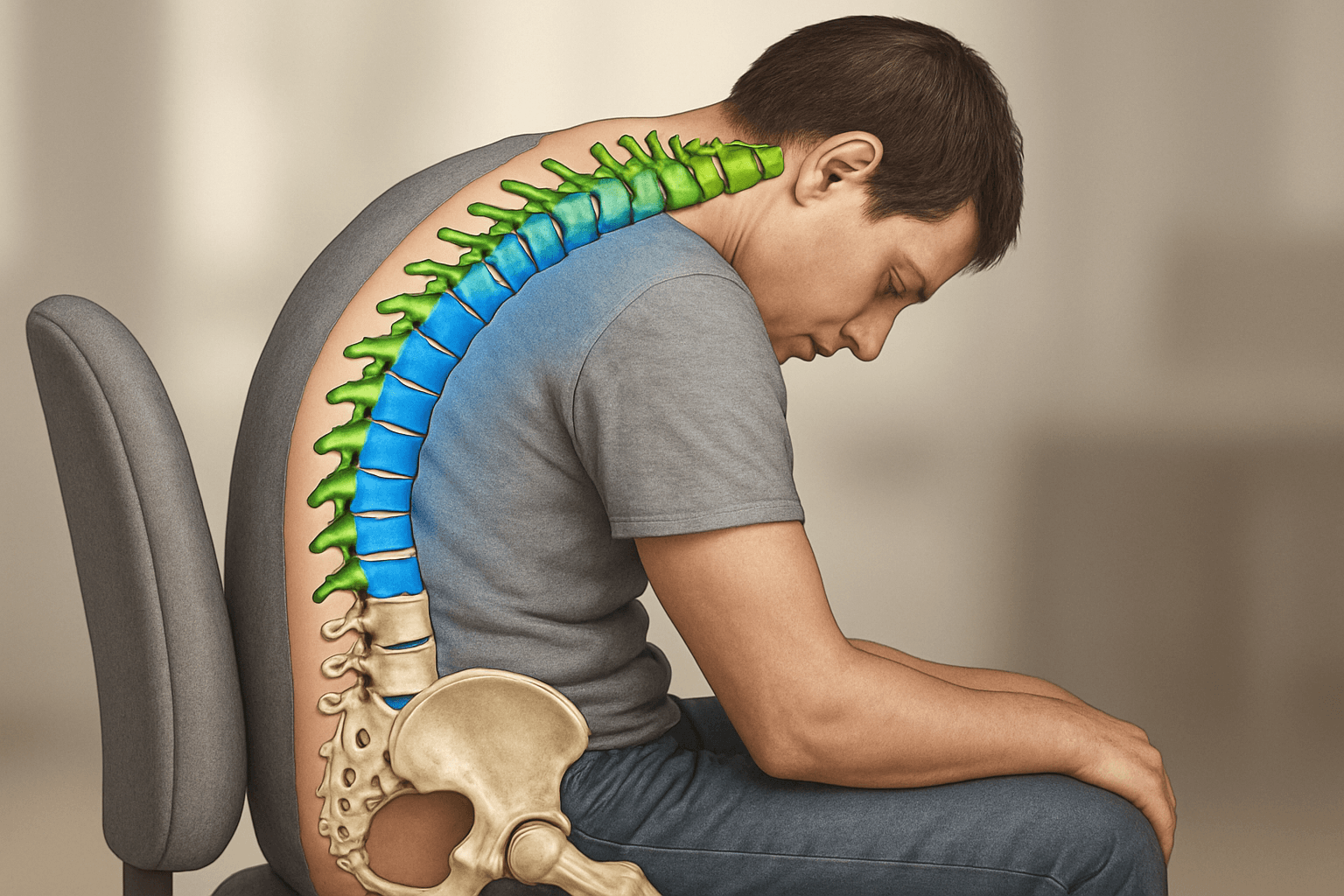
- Neck straightening (loss of cervical lordosis): Think “tech neck” from staring at screens.
- Rounded upper back (thoracic kyphosis): Hours spent hunched forward lead to a more pronounced curve.
- Flattened lower back (lumbar lordosis): Prolonged sitting and weak core muscles can cause this, leading to low back pain.
Often, these issues creep in slowly and can be overlooked until stiffness or pain becomes impossible to ignore.
Senior Years: The Curve Intensifies
Aging can make curve changes more noticeable. As discs between the vertebrae lose water and height, the spine compresses and curves may exaggerate. Bone density drops, making vertebrae more fragile and susceptible to collapse or fracture, which can further increase curve severity.
- Pronounced hunchback (hyperkyphosis): Not just a fairy tale villain’s problem! It’s common in seniors and can affect balance and breathing.
- Sideways curve (scoliosis): Not just for kids—adults can develop scoliosis too, especially after age 60.
Muscle loss, joint wear, and years of postural habits all combine to make these changes more pronounced as the decades roll on.
Lifelong Postural Health: What You Can Do
Now for the good news—spinal curves may change as you age, but you’re not powerless. Here’s how to keep your spine in its best shape:
1. Move Daily
- Walking, swimming, or gentle stretching keep your spine flexible.
- Mix in strength training to support your posture.
2. Mind Your Posture
- Keep screens at eye level.
- Sit with feet flat, shoulders back, and avoid “turtle neck” creeping forward.
- Stand tall with your weight evenly balanced.
3. Strengthen Your Core
- A strong core supports your lower back and helps maintain healthy curves.
4. Maintain Bone Health
- Eat a balanced diet rich in calcium and vitamin D.
- Avoid smoking and excessive alcohol, which can weaken bones.
5. Regular Check-Ups
- Get your posture and spinal health checked by an Advanced BioStructural Correction specialist, especially if you notice new pain or changes.
- Early intervention can prevent small curve changes from becoming major problems.
Key Takeaways
- Spinal curves change as you age, but many changes can be managed or slowed.
- The right habits—movement, posture awareness, and regular check-ups—can keep you upright and active for decades.
- Don’t wait for pain to get curious about your curves; a little prevention today saves a lot of discomfort tomorrow.
FAQs
1. What causes spinal curves to change as you age?
Spinal curves change as you age primarily due to a build up of spinal misalignments caused by a mix of natural aging, lifestyle habits, and sometimes underlying health conditions. Disc wear, muscle weakness, and bone density loss also play a role.
2. Are all curve changes in the spine a cause for concern?
Not all curve changes are dangerous—some are expected as part of aging. However, rapid, painful, or extreme changes should be checked by a professional.
3. Can exercise slow down changes in spinal curves?
Absolutely! Regular movement, especially strength and flexibility exercises, help keep muscles and ligaments strong, slowing the impact of age-related curve changes.
4. What are signs my spinal curves may be changing too much?
Look for persistent back or neck pain, noticeable changes in posture, loss of height, or balance problems. These could indicate curve changes needing attention.
5. When should I see a doctor or specialist?
If you have ongoing pain, numbness, weakness, or a visible change in your posture, book a check-up. Early action keeps small problems from growing.