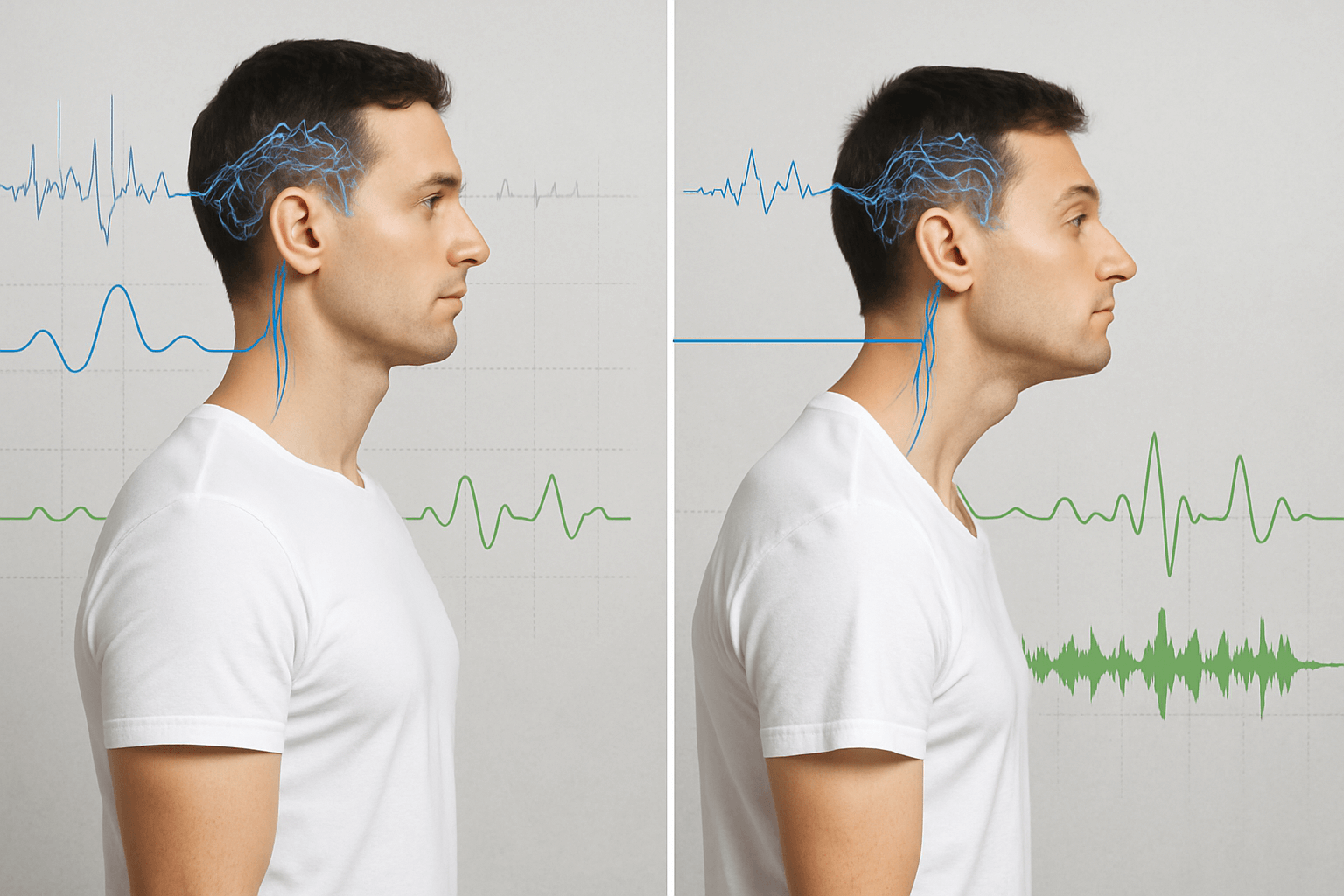
Many people search for a physiotherapist in Birmingham when they’re dealing with ongoing back pain, neck tension, headaches, or mobility restrictions. Physiotherapy is familiar, accessible, and helpful for rehabilitation and strengthening—but what happens when the same issues keep returning? This repetitive cycle often points to a deeper structural problem that physiotherapy alone isn’t designed to correct.
Structural correction, as practised by specialised clinics like Upright Posture, targets the underlying skeletal misalignments that trigger chronic pain and postural collapse. Instead of strengthening around dysfunction, it removes the dysfunction itself—giving patients a chance at true long-term improvement.
Jump To:
- TLDR Quick Guide
- The Limitations of Traditional Physiotherapy
- What Makes Structural Correction Different
- Conditions Where Structural Correction Outperforms Physiotherapy
- Why Birmingham Patients Seek Structural Correction After Physiotherapy
- Key Takeaways
- FAQs
TLDR Quick Guide
- Physiotherapy helps with mobility and symptom relief, but it may not address the root structural cause of recurring pain.
- Structural correction focuses on the spine, skeletal alignment, and postural mechanics—areas physio cannot always fully resolve.
- Birmingham patients experiencing chronic pain, posture issues, or repeated relapses often benefit more from structural correction.
- Techniques like Advanced BioStructural Correction™ support long-term correction rather than temporary symptom management.
- Structural correction can deliver lasting benefits when combined with personalised care from specialists.
The Limitations of Traditional Physiotherapy
Symptom Management vs. Root-Cause Treatment
Physiotherapy excels at improving mobility, reducing inflammation, and rebuilding strength after injury. However, if the skeletal framework is misaligned, muscle-focused treatments may only provide temporary improvement. Chronic issues often resurface when the body returns to its previous structural pattern.
Why Strengthening Alone Isn’t Enough
When bones sit forward or twist into incorrect positions, muscles compensate by tightening, weakening, or overworking. Strength training cannot reposition misaligned structures. This is why patients often feel temporary relief after physiotherapy, only for symptoms to return weeks later.
Recurring Pain Patterns
Recurrent back pain, headaches, joint stiffness, or nerve irritation usually indicate that the body is compensating for a structural breakdown. Without addressing alignment, rehabilitation becomes a revolving door of short-lived improvements.
What Makes Structural Correction Different
Correcting the Spine and Framework
Structural correction directly targets misalignments in the spine and skeleton—not through stretching or strengthening, but through precise corrective adjustments. Approaches like Advanced BioStructural Correction™ allow practitioners to fix what the body cannot self-correct.
Long-Term Postural Improvement
Unlike physiotherapy, which typically works on soft tissues, structural correction allows the body to naturally “unwind” from years of collapsed posture. This process creates long-term, visible changes in how patients stand, move, and feel.
Reversing Deep Compensations
As the body corrects forward-shifted bones, old layers of tension and compensation unwind. This is part of the recognised Unwinding Process, which many patients experience during structural correction.
Conditions Where Structural Correction Outperforms Physiotherapy
Chronic Back & Neck Pain
When pain is driven by forward vertebral collapse or skeletal twisting, structural correction offers targeted relief. Physiotherapy may help manage muscle pain but cannot always resolve underlying mechanical faults. For persistent neck issues, clinics like Upright Posture provide dedicated solutions such as Neck Pain Relief.
Headaches & Migraines
Misaligned upper vertebrae can create tension patterns that trigger migraines. Structural work reduces pressure at the root, offering lasting relief where physiotherapy may fall short.
Posture Problems
Slouching, rounded shoulders, and forward head posture often stem from structural misalignment—not muscle weakness. Correcting the framework changes posture permanently, not temporarily.
Why Birmingham Patients Seek Structural Correction After Physiotherapy
The Search for Long-Term Solutions
Patients who’ve tried months—or years—of physio often look for answers when their pain returns. Structural correction offers an entirely different path by targeting the real cause of dysfunction.
A Better Fit for Complex or Longstanding Issues
When symptoms involve multiple areas (neck, back, hips, shoulders), physiotherapy may treat each separately. Structural correction recognises the body as an interconnected structure and treats it holistically.
Visible, Measurable Progress
Many patients see posture changes, reduced pain, and improved breathing after just a few sessions—indicators that structural alignment is being restored, not just managed.
Key Takeaways
- Physiotherapy is excellent for rehabilitation, but it cannot correct skeletal misalignments.
- Structural correction focuses on the root mechanical cause of recurring pain and dysfunction.
- Birmingham patients often turn to structural correction after physiotherapy plateaus.
- Approaches like ABC™ enable long-term improvements rather than temporary relief.
- Combining both disciplines can enhance recovery—but structural correction fills a crucial missing piece.
FAQs
How is structural correction different from physiotherapy?
Physiotherapy works on muscles, joints, and movement patterns, while structural correction fixes misaligned bones that the body cannot self-correct. This allows the body to return to a neutral, balanced posture. As a result, long-term changes are often more significant than with physio alone.
Can structural correction help if physiotherapy hasn’t worked?
Yes—many patients seek structural correction after experiencing recurring symptoms despite physiotherapy. When the issue is structural, muscle-based treatments can only offer temporary relief. Correcting the skeletal foundation allows symptoms to improve more consistently.
Is structural correction safe?
Structural correction is precise, controlled, and performed by trained professionals. The goal is to remove stress from the body—not add to it. Many patients report increased comfort and mobility even after their first session.
What conditions benefit most from structural correction?
Chronic back pain, neck tension, headaches, poor posture, and nerve-related issues respond particularly well. When misalignment is at the root of the problem, structural correction offers a more targeted solution. Physiotherapy can support the process but cannot replace structural realignment.
Should I choose physiotherapy or structural correction first?
If you’ve had a recent injury, physiotherapy may be the right first step. But if you suffer from long-standing pain, posture issues, or repeated relapses, structural correction often delivers faster, deeper results. Many patients combine both approaches for optimal recovery.