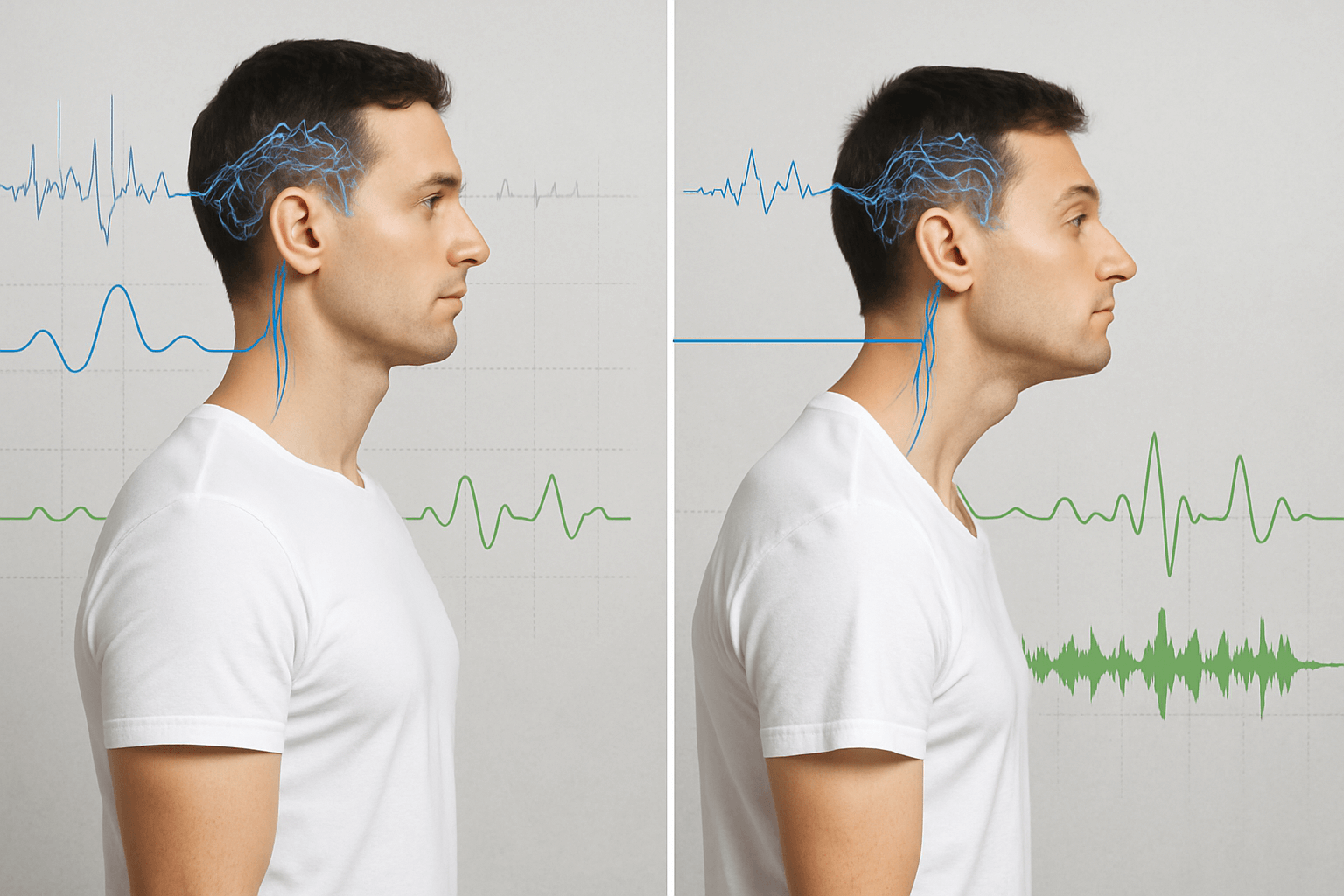
If you’ve ever experienced unexplained discomfort around your ribs or a tight feeling in your chest, posture may be the missing piece. The relationship between rib pain and posture is often overlooked, even though it plays a major role in how your upper body functions.
Most people assume rib or chest tightness is related to muscles or even internal health issues. While that can sometimes be true, structural imbalances—especially from prolonged poor posture—can directly affect how your ribs move, how your chest expands, and how comfortably you breathe.
Understanding this connection can help you move beyond temporary relief and address the root cause of the problem.
Jump To:
TLDR Quick Guide
Rib Pain and Posture Explained
- Poor posture compresses the rib cage
- Tight chest muscles restrict movement and breathing
- Misalignment affects rib joint mobility
- Structural correction improves long-term relief
- Learn more about effective posture correction
Posture doesn’t just affect your back—it affects your entire rib cage.
How Posture Directly Affects the Rib Cage
The Rib Cage Is Designed to Move
Your rib cage isn’t meant to stay rigid—it expands and contracts with every breath. This movement is essential for healthy breathing and overall mobility.
When posture is aligned properly, the ribs move freely and symmetrically.
But when posture is compromised, that movement becomes restricted.
Slouched Posture Compresses the Chest
Forward head posture, rounded shoulders, and slouching all push the rib cage into a compressed position. This reduces the space your lungs have to expand.
Over time, this can lead to:
- tightness across the chest
- discomfort along the ribs
- shallow breathing patterns
This is one of the most common causes of posture-related rib pain.
Why Rib Pain Develops From Poor Posture
Joint Restrictions Between the Ribs and Spine
Each rib connects to your spine through small joints. When posture is misaligned, these joints can become stiff or restricted.
This leads to:
- localized rib pain
- sharp or aching sensations
- discomfort when twisting or breathing deeply
These restrictions often go unnoticed until symptoms worsen.
Muscle Imbalances Around the Chest and Back
Poor posture creates imbalance between the front and back of the body. Chest muscles tighten while upper back muscles weaken.
This imbalance pulls the rib cage out of its natural position.
And keeps it there for extended periods.
Chest Tightness and Breathing Difficulties
Restricted Rib Expansion
When the rib cage can’t expand properly, breathing becomes less efficient. You may feel like you can’t take a full breath, even if your lungs are healthy.
This creates a sensation of tightness or pressure in the chest.
Which is often mistaken for other issues.
Posture and Airway Function
Structural alignment doesn’t just affect the ribs—it also impacts airway function. Poor posture can reduce chest expansion and affect how air moves through your body.
Advanced approaches like Advanced BioStructural Correction focus on restoring proper alignment to improve both posture and breathing efficiency.
This highlights how interconnected these systems are.
Why Stretching Alone Doesn’t Solve the Problem
Temporary Relief vs Structural Change
Many people try stretching or massage to relieve chest tightness. While this can help temporarily, it doesn’t address the underlying structural issue.
If your posture remains unchanged, the tension will return.
Sometimes even stronger than before.
The Body Returns to Its Default Position
Your body adapts to its habitual posture. Without correcting the root cause, it will continue returning to the same misaligned position.
This is why symptoms persist.
And why long-term solutions require structural correction.
A Root-Cause Approach to Rib Pain and Posture
Correcting the Structure, Not Just the Symptoms
To resolve rib pain effectively, you need to address the structural alignment of the body. This involves restoring the natural positioning of the spine, rib cage, and surrounding muscles.
This is where specialized approaches come into play.
They focus on correcting the source—not just managing discomfort.
Real-World Results From Structural Correction
Evidence continues to show how posture correction can impact breathing and pain. For example, this case study on how fixing posture improved breathing and reduced pain highlights the connection between alignment and function.
This reinforces the importance of addressing posture as a primary factor.
Not just a secondary consideration.
When to Consider Professional Help
Persistent Rib or Chest Tightness
If you’ve been experiencing rib discomfort or chest tightness that doesn’t improve, it may be time to look deeper than surface-level treatments.
Especially if symptoms:
- return frequently
- worsen over time
- affect breathing or movement
These are signs of a structural issue.
Looking Beyond Traditional Approaches
Many conventional treatments focus on symptom relief. While helpful, they often don’t address the underlying cause.
Clinics like Upright Posture specialize in identifying and correcting structural imbalances.
This offers a more long-term solution.
Key Takeaways
- Rib pain and posture are closely connected through structural alignment
- Poor posture compresses the rib cage and restricts movement
- Chest tightness often comes from limited rib expansion and muscle imbalance
- Stretching alone doesn’t fix structural problems
- Correcting posture at the root leads to long-term relief and better breathing
FAQs
Can poor posture really cause rib pain?
Yes, poor posture can directly affect the rib cage and surrounding joints. It can create restrictions and muscle imbalances that lead to pain. Over time, this becomes more noticeable and persistent.
Why does my chest feel tight even when I’m healthy?
Chest tightness can come from restricted rib movement due to poor posture. When the rib cage can’t expand properly, breathing feels limited. This creates a sensation of tightness or pressure.
Is rib pain from posture serious?
In most cases, it’s not dangerous but can become chronic if ignored. It often indicates a structural imbalance in the body. Addressing it early can prevent long-term issues.
How do I know if my posture is the cause?
If your symptoms are affected by movement, sitting, or posture changes, it’s a strong indicator. Persistent discomfort despite stretching is another sign. A professional assessment can confirm the cause.