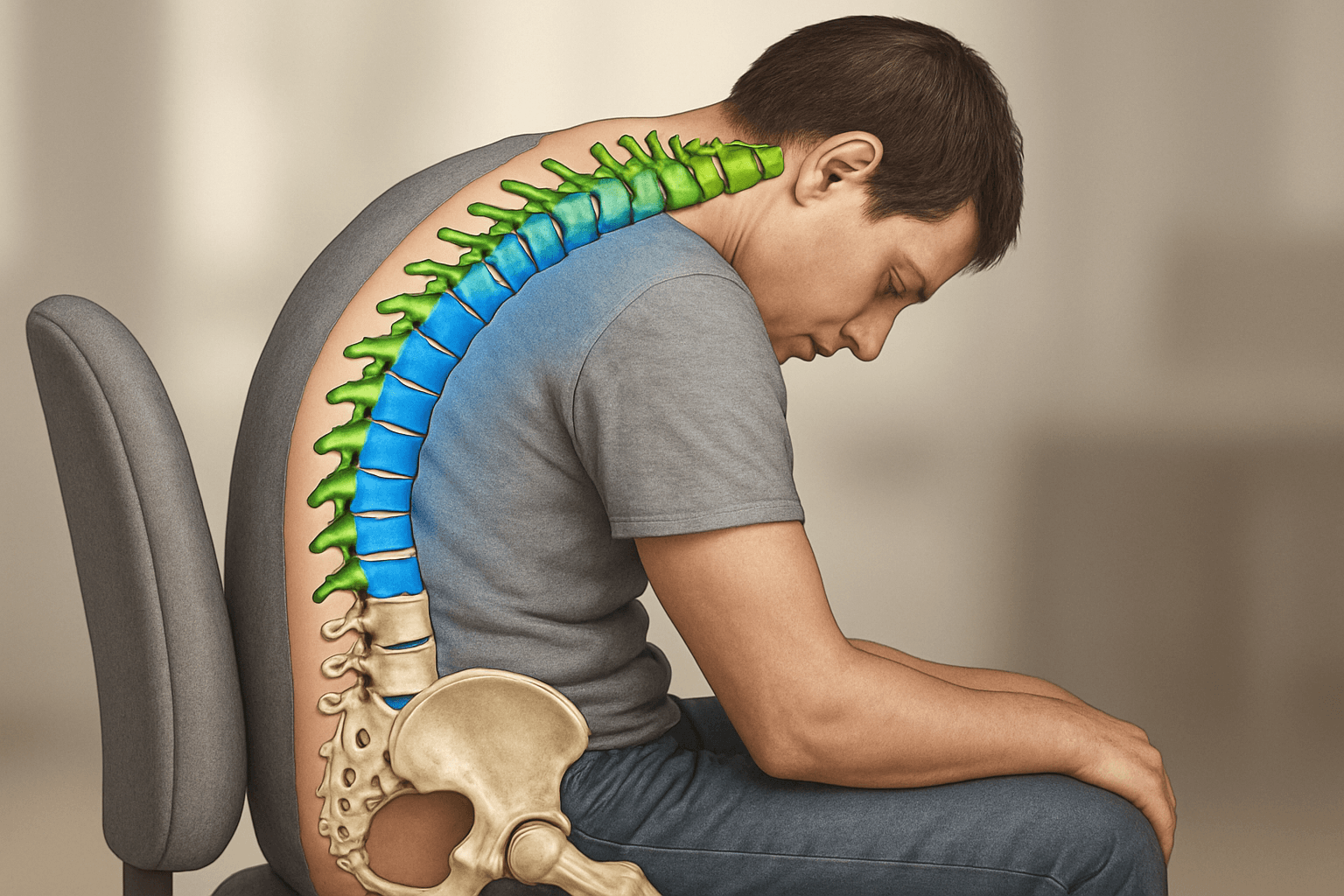
Posture problems are not always as simple as remembering to sit straighter or pulling your shoulders back. When one shoulder appears higher, the head consistently sits forward, the pelvis feels uneven, or standing upright requires conscious effort, there may be several factors contributing to what you see and feel.
A structural alignment assessment is designed to look beyond the visible symptom. Rather than focusing exclusively on the area that feels uncomfortable, the practitioner evaluates posture, alignment, movement, function, health history, and the ways different parts of the body may be compensating for one another.
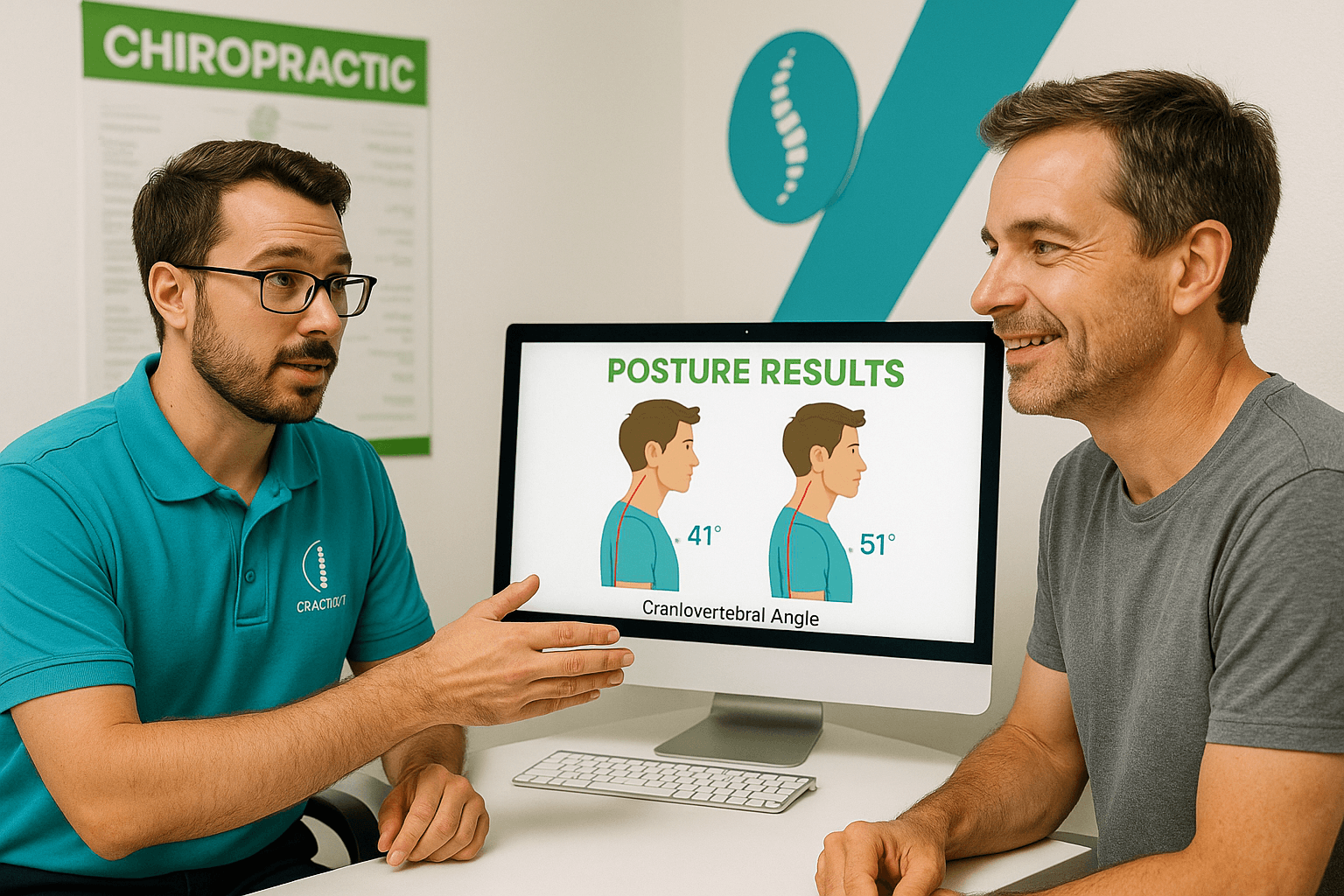
At Upright Posture, the initial physical assessment is described as a 60-minute appointment that includes a detailed health questionnaire and testing of pain, alignment, posture, and function. The clinic also uses before-and-after posture photographs and explains a personalised recovery plan based on the assessment.
Understanding what happens during this process can make a first appointment much less uncertain. It can also help you understand why a comprehensive assessment may involve considerably more than examining the part of your body that currently hurts.
Jump To:
- TLDR Quick Guide
- What Is a Structural Alignment Assessment?
- Step 1: Reviewing Your Health and Symptom History
- Step 2: Discussing What You Have Actually Noticed
- Step 3: Observing Your Natural Standing Posture
- Step 4: Looking for Compensation Patterns
- Step 5: Assessing Movement and Function
- Step 6: Comparing Posture With Symptoms
- Step 7: Establishing a Baseline
- Step 8: Understanding the Findings
- What Happens After the Assessment?
- How Should You Prepare for a Structural Alignment Assessment?
- Who Might Consider a Structural Alignment Assessment?
- What a Structural Alignment Assessment Cannot Tell You From Appearance Alone
- Key Takeaways
- FAQs
TLDR Quick Guide
What Happens During a Structural Alignment Assessment?
A typical assessment may involve several stages rather than a single posture check:
- Reviewing your health, injury, and symptom history
- Discussing when your posture concerns began
- Looking at how you naturally stand
- Comparing shoulders, hips, head position, and overall balance
- Assessing movement and functional patterns
- Looking for areas where the body appears to compensate
- Discussing pain, stiffness, mobility, or recurring symptoms
- Recording relevant baseline findings
- Explaining what the assessment suggests
- Developing an individual care plan when appropriate
At Upright Posture specifically, the assessment forms part of its Advanced BioStructural Correction™ approach, which focuses on structural alignment and the compensations that may develop around it.
What Is a Structural Alignment Assessment?
It Looks at the Body as an Interconnected Structure
A posture assessment shouldn’t simply ask whether your shoulders look level in a photograph.
The position of the head, shoulders, spine, pelvis, and lower body can influence how someone stands and moves. When one area changes position, another area may adapt to help maintain balance and function.
For example, an apparently uneven shoulder does not necessarily mean that the shoulder itself is the only issue. Upright Posture’s own educational material discusses how shoulder asymmetry can potentially be associated with broader structural and postural compensation patterns.
This is one reason a structural assessment considers the bigger picture rather than isolating one visible difference.
Assessment Comes Before Assumptions
It can be tempting to look at a photograph of poor posture and immediately assign a cause.
A proper assessment should avoid that shortcut.
Two people may both appear to have rounded shoulders but arrive at that posture through different combinations of habits, previous injuries, mobility restrictions, structural characteristics, and compensation patterns.
The purpose of assessment is therefore not simply to confirm that your posture “looks wrong.” It is to gather enough information to understand what may be contributing to the pattern and determine whether care is appropriate.
Step 1: Reviewing Your Health and Symptom History
Expect Questions About More Than Today’s Pain
The assessment often begins before physical testing.
Your practitioner needs context, so expect questions about current symptoms, previous injuries, accidents, surgeries, work habits, physical activity, and other relevant health information.
You may also be asked when you first noticed your posture changing and whether symptoms have become progressively worse or fluctuate.
At Upright Posture, patients complete a detailed pre-assessment health questionnaire before the physical evaluation.
Old Injuries Can Provide Useful Context
An injury that happened years ago may seem irrelevant if it no longer hurts.
However, previous injuries can sometimes change how people move, load one side of the body, or protect a particular area. Those adaptations can potentially persist even after the original discomfort has improved.
That does not mean every old injury is responsible for your current posture.
It simply means your history provides useful context when interpreting what is found during the physical assessment.
Step 2: Discussing What You Have Actually Noticed
Your Experience Matters Alongside Visual Posture
Posture isn’t only about appearance.
Tell the practitioner if you notice yourself leaning when standing, consistently shifting weight onto one leg, feeling uncomfortable when sitting upright, or experiencing stiffness after maintaining one position.
Other useful observations might include:
- One shoulder appearing higher
- Clothing sitting unevenly
- Feeling twisted while standing
- Persistent neck or back tension
- Difficulty turning comfortably in one direction
- One hip appearing higher
- Feeling off-balance
- Repeated discomfort after desk work
- Difficulty maintaining an upright position
Small observations can help connect what you experience during everyday life with what appears during assessment.
Describe Patterns, Not Just Pain Scores
Instead of only saying your back pain is “seven out of ten,” describe what makes it better or worse.
Does it increase after sitting? Does walking help? Is it worse in the morning or evening? Does one position consistently trigger it?
Patterns can provide useful functional information.
A structural assessment is intended to understand how your body behaves, not merely attach a number to discomfort.
Step 3: Observing Your Natural Standing Posture
You Shouldn’t Try to Stand Perfectly
When someone tells you they’re assessing your posture, the natural reaction is to immediately stand taller.
Try not to.
The practitioner needs to see how you normally organise your body rather than the posture you can consciously create for several seconds.
If you artificially pull your shoulders back, lift your chest, or force your head backwards, you may temporarily hide the pattern the assessment is intended to examine.
Several Areas May Be Compared
A posture evaluation may consider relationships between areas such as:
- Head and neck position
- Shoulder height
- Ribcage position
- Spinal alignment
- Pelvic position
- Hip level
- Weight distribution
- Lower-body positioning
- Overall balance
These observations are interpreted together rather than treating every asymmetry as a separate problem.
If posture is your primary concern, learning more about professional posture correction can also help explain why assessment looks beyond simply telling someone to “stand straight.”
Step 4: Looking for Compensation Patterns
Your Body Is Constantly Trying to Keep You Functional
Humans are remarkably adaptable.
When one area isn’t moving or positioning efficiently, other areas may alter their behaviour so you can continue standing, walking, working, and exercising.
Those adaptations can be useful in the short term.
Over time, however, repeated compensation may influence how you distribute weight, hold your shoulders, position your head, or move through everyday activities.
The Visible Problem May Not Be the Starting Point
Imagine that one shoulder appears elevated.
It would be easy to focus entirely on stretching or strengthening that shoulder. But if the shoulder position is part of a larger postural pattern, working only on the visible symptom may not explain why it developed.
Upright Posture’s educational material makes this distinction when discussing uneven shoulders and functional leg-length appearances, describing how pelvic or spinal positioning may create compensatory patterns elsewhere in the body.
A structural alignment assessment therefore attempts to determine whether different observations are connected.
Step 5: Assessing Movement and Function
Standing Still Only Tells Part of the Story
Static posture provides useful information, but humans don’t spend their lives standing motionless.
Movement can reveal patterns that aren’t obvious when you’re stationary.
Depending on the practitioner and your presentation, functional testing may explore how comfortably and symmetrically you perform relevant movements. Upright Posture specifically states that its physical assessment includes function testing alongside posture and alignment assessment.
The objective is not to judge athletic ability.
It is to understand how your body manages ordinary movement.
Mobility and Alignment Need Context
Limited movement in one area can affect how another part of the body completes a task.
For example, if movement is restricted somewhere within a chain, another region may contribute more motion to compensate.
This is why a whole-body assessment can be more informative than examining one painful area in isolation.
Your practitioner can then determine which findings appear relevant and which may simply represent normal individual variation.
Step 6: Comparing Posture With Symptoms
Not Every Asymmetry Causes Pain
Human bodies aren’t perfectly symmetrical.
A small difference between the left and right sides doesn’t automatically indicate a problem requiring treatment.
The more important question is whether an observed pattern corresponds with symptoms, restricted function, recurring discomfort, or meaningful postural changes.
A responsible assessment considers those factors together.
Pain Location Doesn’t Always Explain the Entire Pattern
Where you feel discomfort is obviously important, but it is only one piece of information.
If someone repeatedly experiences shoulder discomfort, for example, the assessment may still consider the neck, upper back, ribcage, and broader posture rather than examining the shoulder alone.
That doesn’t mean another body region is automatically “causing” the pain.
It means the practitioner is gathering enough information to understand the problem in context before recommending a course of action.
Step 7: Establishing a Baseline
Progress Is Easier to Understand When You Know Where You Started
If posture correction is recommended, baseline information provides something meaningful to compare later.
Without a starting reference, people often judge progress entirely from memory.
That can be unreliable because gradual changes are difficult to notice.
Upright Posture states that its initial physical assessment includes before-and-after posture photographs, providing visual information alongside its alignment, posture, pain, and functional testing.
Objective Changes and Symptoms Are Both Relevant
Posture improvement isn’t only about creating a better-looking photograph.
Useful progress can involve how comfortably you move, how you function during daily activities, whether recurring symptoms change, and whether relevant assessment findings improve.
A photograph can provide one reference point.
It should be considered alongside the broader clinical picture.
Step 8: Understanding the Findings
Your Practitioner Should Explain What Was Found
An assessment becomes much more useful when you understand the results.
You should be able to ask:
- What did you notice?
- Which findings appear important?
- How might they relate to my symptoms?
- What are the priorities?
- What happens next?
- How will progress be evaluated?
Explanations should be understandable without requiring you to become an expert in anatomy.
Ask Questions Before Starting a Plan
If treatment is recommended, understand what is being proposed and why.
Ask what the objectives are, what the expected process involves, whether there are alternatives, and how progress will be reviewed.
Upright Posture describes its initial assessment as including an explanation of a personalised recovery plan.
If you’re preparing for an appointment, the clinic’s new patient information can also help you understand the process before arriving.
What Happens After the Assessment?
Recommendations Should Reflect Your Individual Findings
A structural assessment shouldn’t automatically produce exactly the same plan for everyone.
Your history, symptoms, functional limitations, alignment findings, goals, and response to care can all influence recommendations.
At Upright Posture, ABC™ is the clinic’s principal structural chiropractic approach. Its published material describes treatment decisions as being based on structural testing rather than assuming every patient requires the same correction.
Individualisation matters because similar-looking posture problems can have different contributing factors.
Reassessment Helps Determine Whether Things Are Changing
Posture correction should not rely solely on vague impressions.
If care continues, periodic reassessment can help compare current findings with the original baseline.
That comparison can help answer a straightforward question: is the plan producing meaningful changes in the areas being monitored?
If progress isn’t occurring as expected, the treatment strategy may need reconsideration.
How Should You Prepare for a Structural Alignment Assessment?
Bring Useful Information
You don’t need to spend days preparing.
However, it can help to know:
- When your symptoms started
- Previous injuries or accidents
- Treatments you’ve already tried
- What makes symptoms better or worse
- How symptoms affect work or exercise
- Changes you’ve noticed in your posture
- Your primary goals for seeking care
If you have relevant medical information or imaging, ask the clinic beforehand whether they would like you to bring it.
Wear Clothing That Allows Comfortable Movement
Because posture and function may be evaluated, comfortable clothing is usually practical.
Follow any specific instructions provided by your clinic.
Most importantly, don’t spend the hours before your appointment consciously forcing yourself into “perfect” posture. The assessment needs to understand your normal patterns.
Who Might Consider a Structural Alignment Assessment?
Persistent Posture Changes Deserve More Than Guesswork
An assessment may be worth discussing if you’ve noticed persistent or worsening changes such as uneven shoulders, forward head posture, recurrent leaning, or difficulty maintaining a comfortable upright position.
It may also be useful when posture concerns occur alongside recurring stiffness, pain, or restricted movement.
The purpose isn’t to diagnose yourself from appearance.
It is to determine whether professional evaluation can clarify what is happening.
Recurring Problems Can Be a Reason to Look Deeper
Some people seek structural assessment after repeatedly addressing the same symptoms without understanding why they return.
Others aren’t primarily in pain but have become concerned about visible changes in posture or movement.
Either way, assessment should come before conclusions.
A detailed examination can distinguish potentially relevant findings from assumptions based solely on how someone looks in a mirror.
What a Structural Alignment Assessment Cannot Tell You From Appearance Alone
Posture Isn’t a Standalone Diagnosis
A photograph of someone standing unevenly cannot establish every underlying cause.
Posture can be influenced by many factors, and some symptoms require medical investigation outside chiropractic care.
If your presentation suggests something requiring another healthcare professional, appropriate referral or further investigation may be necessary.
Sudden Neurological or Severe Symptoms Need Appropriate Medical Attention
Posture concerns that develop gradually are different from sudden changes accompanied by serious symptoms.
New weakness, significant loss of coordination, severe unexplained pain, major trauma, changes in bladder or bowel control, or other concerning neurological symptoms warrant appropriate medical assessment rather than assuming the issue is simply poor posture.
Structural assessment has a role, but it shouldn’t replace medical evaluation when symptoms indicate that broader investigation may be necessary.
Key Takeaways
What to Remember Before Your Assessment
- A structural alignment assessment examines more than how straight you appear.
- Health and injury history provide important context for current posture concerns.
- Natural standing posture can reveal patterns that disappear when you consciously “stand up straight.”
- Alignment, posture, pain, movement, and function should be considered together.
- The body may develop compensation patterns that make the visible symptom different from the underlying issue.
- Not every asymmetry automatically indicates a problem.
- Baseline measurements or photographs can make future comparisons more meaningful.
- Your practitioner should explain relevant findings and why a particular plan is recommended.
- Treatment recommendations should reflect your individual assessment rather than posture appearance alone.
- Serious or sudden neurological symptoms require appropriate medical evaluation.
Ultimately, the value of an assessment isn’t simply being told that your posture is uneven. It is developing a clearer picture of how your body is positioned, how it functions, what may be contributing to your concerns, and what the appropriate next step should be.
FAQs
How long does a structural alignment assessment take?
Assessment length varies between clinics depending on the examination and your individual needs. Upright Posture currently describes its physical assessment as a 60-minute appointment incorporating health history, pain, alignment, posture, and function testing. Allow enough time that you don’t feel pressured to rush through your history or questions.
What should I wear for a posture assessment?
Comfortable clothing that allows you to stand and move naturally is generally a practical choice for an appointment involving posture and functional assessment. Follow any specific preparation instructions provided by the clinic because assessment procedures can vary. Avoid deliberately changing the way you normally stand, as the practitioner needs to observe your natural posture.
Will a structural alignment assessment tell me why my posture is uneven?
The assessment can help identify relevant patterns in posture, alignment, movement, function, and your history that may contribute to the problem. However, posture appearance alone cannot establish every possible cause, and further investigation may sometimes be appropriate. The goal is to build a more informed clinical picture rather than make assumptions from one visible asymmetry.
Do I need to be in pain to have my posture assessed?
No, some people seek assessment because they have noticed changes in alignment, balance, or movement rather than significant pain. Others have recurring discomfort and want to understand whether broader posture or functional patterns may be relevant. Whether assessment is appropriate depends on your individual concerns and clinical presentation.
What happens after my structural alignment assessment?
Your practitioner should explain the relevant findings and discuss whether treatment, monitoring, another form of care, or further evaluation is appropriate. Upright Posture states that its assessment process includes explaining a personalised recovery plan and, where appropriate, beginning ABC™ treatment. You should understand the proposed goals and have an opportunity to ask questions before proceeding.