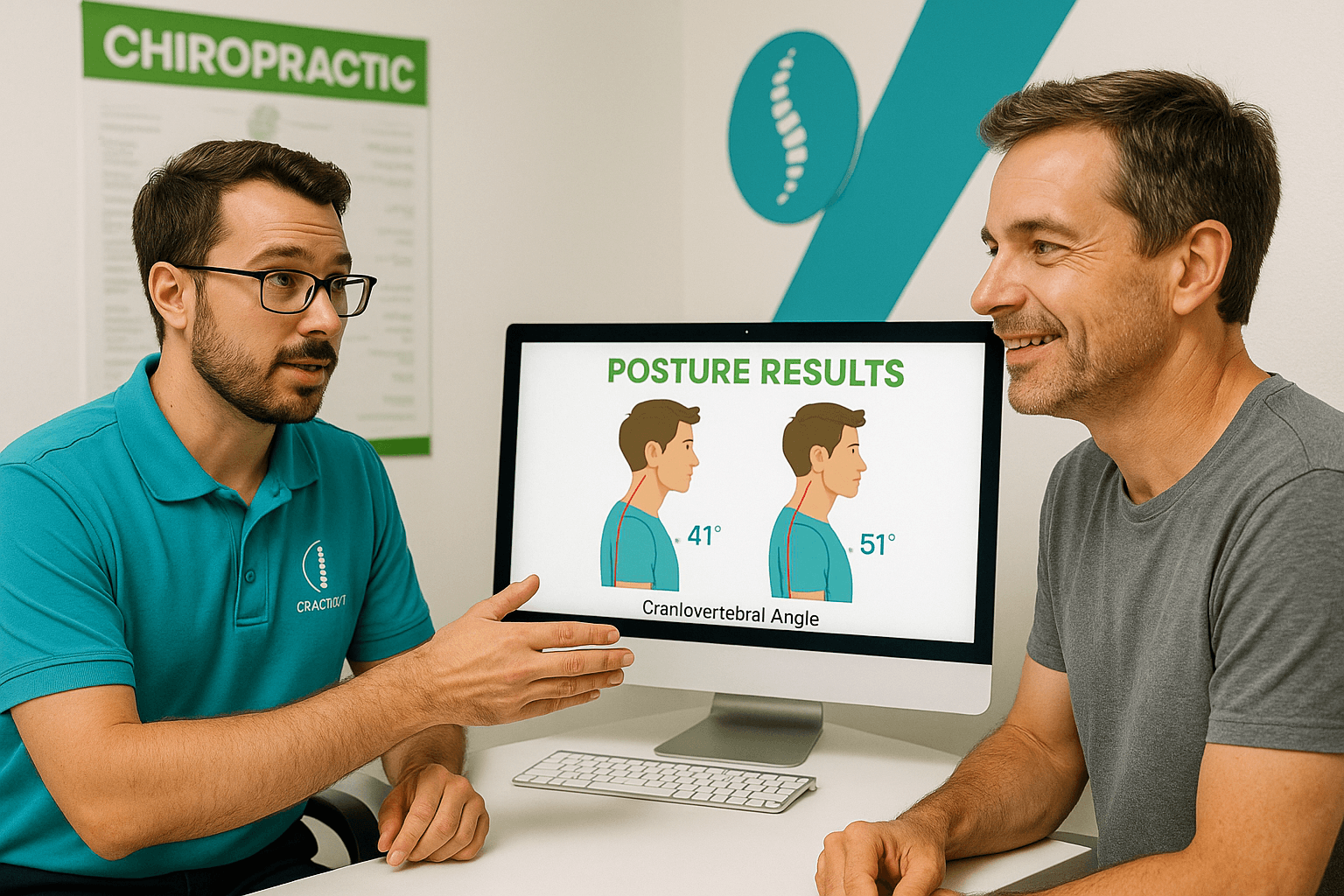
We’ve all heard that poor posture is bad for your back. But a new study has mapped out exactly how—and why—spinal misalignment leads directly to structural damage, disc degeneration, and long-term disability.
Published in Clinical Biomechanics, the study explores the “triadic relationship” between spinal posture, mechanical loading, and spinal degeneration. In simple terms: when posture goes off, so does the internal pressure on your spine—and over time, that leads to irreversible damage.
The findings reinforce what structural correction chiropractors and Advanced BioStructural Correction™ (ABC™) practitioners have seen for years: posture isn’t just a symptom of spinal problems—it’s the cause.
Jump to:
- TLDR – Quick Guide
- Breaking Down the Research: What Scientists Found About Spinal Misalignment
- The Vicious Cycle: Misalignment → Stress → Breakdown
- The Role of Sagittal Alignment: The Forgotten Factor in Spinal Health
- Why Advanced BioStructural Correction™ Is Different
- Clinical Takeaway: Posture Isn’t a Symptom—It’s the First Stage of Disease
- What You Can Do
- Key Takeaways
- FAQs
TLDR – Quick Guide
- What the Study Shows: Poor posture, particularly in the side-view (sagittal) plane, causes spinal stress and long-term degeneration.
- The Consequence: Misalignment leads to abnormal load distribution, disc dehydration, herniation, and vertebral breakdown.
- The Fix: Advanced BioStructural Correction™ (ABC™) restores natural spinal structure and halts this degenerative cycle.
- Your Next Step: Don’t wait for pain—get a posture analysis and address the root mechanical issues before damage sets in.
Breaking Down the Research: What Scientists Found About Spinal Misalignment

The researchers reviewed decades of spinal biomechanics studies to understand the interplay between:
- Posture (the alignment of the spine)
- Loading (how forces are transmitted through the spine)
- Degeneration (structural breakdown over time)
They found strong evidence that abnormal spinal alignment—especially sagittal misalignment (side-view posture)—increases mechanical stress on intervertebral discs, alters spinal biomechanics, and leads to premature wear and tear.
In other words, posture isn’t just cosmetic—it determines how your spine ages.
The Vicious Cycle: Misalignment → Stress → Breakdown
Here’s how it works:
- When the spine loses its natural alignment (especially a forward head or flat back), load is redistributed unevenly through the vertebrae and discs.
- This misloading causes high compressive and shear forces in the wrong areas of the spine.
- These abnormal forces lead to structural failure: disc dehydration, bulging, herniation, and vertebral degeneration.
- As spinal structures degenerate, posture worsens, creating a feedback loop of deterioration.
This explains why disc degeneration often starts silently, long before pain begins. By the time you feel stiffness, fatigue, or nerve symptoms, the damage may already be well underway.
The Role of Sagittal Alignment: The Forgotten Factor in Spinal Health
One of the most important findings of this study is that sagittal plane alignment (side-view posture) is critical for long-term spinal health. Flattened spinal curves, forward head posture, and a loss of lumbar lordosis are all red flags—not just for poor posture, but for structural collapse. These alignment issues aren’t just symptoms—they’re often the root cause of poor posture itself.
Yet most treatment approaches—like massage, core strengthening, or general chiropractic—focus on relief, not realignment. That’s where structural correction methods like Advanced BioStructural Correction™ stand out.
Why Advanced BioStructural Correction™ Is Different
ABC™ doesn’t chase symptoms—it corrects structure. The ABC™ protocol identifies and corrects misalignments that the body cannot self-correct. These “unrecoverable” misalignments are the ones that silently shift spinal load and distort posture—triggering the degenerative cascade outlined in the study.
By correcting these specific mechanical faults:
- The body regains its natural upright posture
- Loading is normalized across spinal structures
- Stress on discs and joints is reduced
- The degenerative cycle is interrupted
Rather than waiting for damage to accumulate, ABC™ practitioners aim to prevent it—by restoring the mechanical blueprint your spine was designed to follow.
Clinical Takeaway: Posture Isn’t a Symptom—It’s the First Stage of Disease
This paper makes one thing very clear: spinal degeneration is not random or inevitable—it’s mechanical. And poor posture is the clearest early warning sign.
If you’re seeing forward head carriage, a flat back, or pelvic collapse in your patients (or yourself), don’t just stretch, strengthen, or adjust for temporary relief. Those misalignments are already changing the way your spine handles load, setting the stage for long-term damage.
The sooner structure is corrected, the better the prognosis. The longer you wait, the more compensation, fatigue, and degeneration build up—and the harder it becomes to reverse.
What You Can Do
If you’re concerned about spinal wear and tear, or you’re noticing poor posture in the mirror or in photos, don’t ignore it. This study confirms that postural misalignment is the earliest—and most important—indicator of spinal breakdown.
Steps to take:
- Get a side-view posture analysis from someone trained in spinal mechanics
- Seek structural correction—not just symptom relief
- Avoid repetitive or forced exercises that can worsen compensations
- Investigate ABC™ care if you want a long-term approach based on mechanics, not pain masking
Key Takeaways
Postural collapse isn’t just an aesthetic issue. It’s the first domino in a mechanical chain reaction that ends in disc degeneration, joint instability, and chronic disability. This new research reinforces what structural experts have long observed—and what too many treatments overlook.
Here’s what you should take away:
- Posture isn’t a symptom—it’s a signal. Structural misalignment is often the first sign your spine is under mechanical stress.
- Sagittal posture is critical. Side-view misalignments, like forward head posture and flat backs, are key contributors to spinal wear.
- Degeneration starts silently. By the time you feel stiffness or pain, significant damage may already be happening.
- ABC™ corrects what the body can’t fix alone. It restores alignment by targeting deep, mechanical faults—not just symptoms.
- Early intervention gives the best chance of long-term recovery. The longer misalignment persists, the harder it becomes to reverse.
This study provides powerful scientific backing for the view that structure governs function—and that correcting posture early is key to preventing spinal decay. With Advanced BioStructural Correction™, there’s now a method to not only halt this process—but begin reversing its effects naturally.
Clinics like Upright Posture are at the forefront of applying this approach in real-world settings, helping patients not only relieve pain but reclaim confident, upright posture. By addressing the structural root instead of masking symptoms, our ABC™-based care empowers the body to heal itself—without reliance on gimmicks or endless adjustments. If you’re serious about long-term spinal health, this kind of focused structural correction could be the turning point. Schedule a consultation with Upright Posture today and start your path to a stronger, aligned spine.
FAQs
Can ABC™ help even if I don’t have back pain yet?
Yes. ABC™ is designed to address structural misalignments before they lead to pain or degeneration. It’s a proactive approach ideal for preventing future issues.
How long does it take to see results with ABC™?
Some people feel noticeable improvements after just a few sessions, especially in posture and breathing. Long-term correction typically takes a few months depending on the severity of misalignments.
Is bad posture always the cause of spinal problems?
It’s a major contributor, especially in chronic cases. While trauma and genetics can play roles, the way your body handles load due to posture often drives degeneration.
Can posture braces fix alignment permanently?
Posture braces offer short-term support but don’t address the root cause of misalignment. In some cases, they can even create dependency and worsen compensation patterns.
What qualifications should I look for in an ABC™ practitioner?
Choose a certified ABC™ provider who specializes in structural correction. Look for clinics with experience in full-body assessments and a track record of long-term client success.