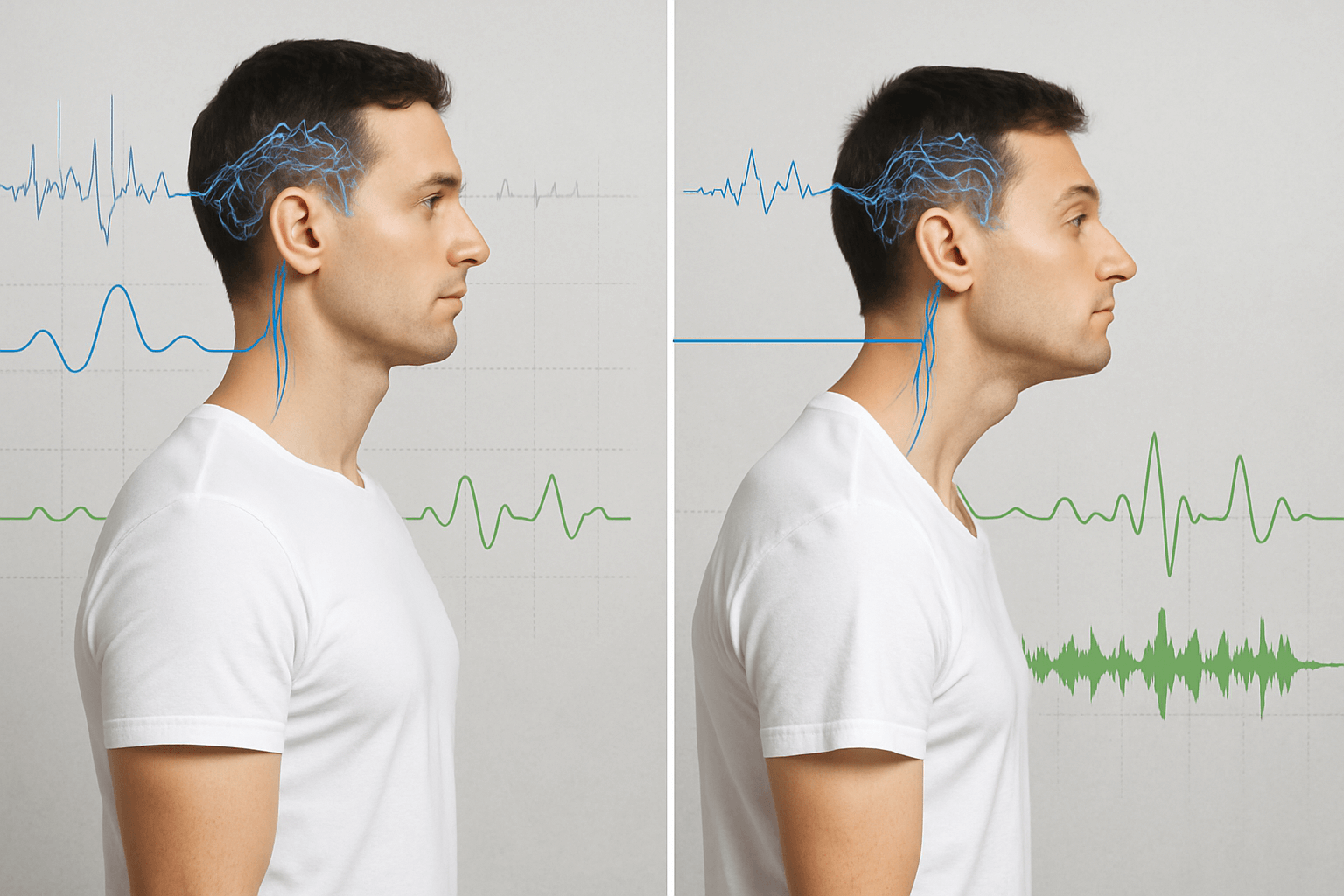
Many patients ask the same frustrating question: If my scans are normal, why do I still feel dizzy? It’s common to undergo MRI or CT imaging only to be told everything looks fine. But structural imbalances—especially in the upper neck—don’t always show clearly on standard imaging. So, can bad posture cause dizziness even when medical scans appear normal? In many cases, yes—and understanding why requires looking at how posture influences balance, muscle tension, and neurological communication.
Jump To:
- TLDR Quick Guide
- Why Normal Scans Don’t Always Explain Dizziness
- How Bad Posture Can Affect Balance
- The Role of the Upper Cervical Spine
- Posture-Related Dizziness vs Inner Ear Disorders
- Why Shoulder and Upper Back Tension Matter
- When Structural Correction Becomes Relevant
- Common Signs Dizziness May Be Posture-Related
- Key Takeaways
- FAQs
TLDR Quick Guide
- Can bad posture cause dizziness? Yes—especially when upper-neck alignment is involved.
- Normal MRI or CT scans don’t always detect functional misalignment.
- Forward head posture can disrupt balance signals.
- Upper cervical stress affects muscle tension and nerve signaling.
- Structural correction may reduce dizziness when other tests are clear.
Why Normal Scans Don’t Always Explain Dizziness
Structural vs Functional Problems
Medical scans are excellent at identifying fractures, tumors, or major abnormalities. However, they are less effective at detecting subtle alignment distortions or chronic postural strain. Dizziness linked to posture often falls into this functional category.
Alignment Isn’t Always Visible on Standard Imaging
Upper cervical misalignment can alter biomechanics without appearing dramatic on imaging. Even small positional shifts affect muscle tone and nerve communication. This is why symptoms can exist despite “clear” scans.
How Bad Posture Can Affect Balance
Forward Head Posture and Neurological Load
When the head shifts forward, it increases strain on the upper cervical spine. This region houses nerves that help coordinate balance and spatial awareness. Chronic tension here can disrupt those signals.
Muscle Imbalance and Sensory Confusion
Neck muscles contain proprioceptors—sensors that tell your brain where your head is positioned. Poor posture alters their feedback. When the brain receives inconsistent signals, dizziness can result.
You can explore more detailed research on this connection here:
👉 Why bad posture can make you dizzy and what you can do about it
The Role of the Upper Cervical Spine
Suboccipital Tension and Compression
The small muscles at the base of the skull are highly sensitive. When compressed or overworked, they may contribute to dizziness and head pressure. This is sometimes referred to as cervicogenic dizziness.
Why Symptoms Fluctuate
Patients often notice dizziness that worsens with prolonged sitting, screen use, or stress. These activities reinforce poor posture and muscle tension. Temporary relief may occur with rest or massage—but the underlying alignment remains.
Posture-Related Dizziness vs Inner Ear Disorders
Key Differences
Inner ear conditions often involve spinning sensations and nausea. Posture-related dizziness may feel more like instability, fogginess, or imbalance. It can worsen with head movement or prolonged sitting.
Overlapping Symptoms
Because symptoms overlap, posture-related dizziness is often overlooked. If ENT testing is normal, structural evaluation becomes important. A chiropractor in your area—such as a chiropractor in Sutton Coldfield—may assess alignment patterns contributing to imbalance.
Why Shoulder and Upper Back Tension Matter
Postural Chains
The neck does not function alone. Rounded shoulders and upper back stiffness influence head positioning. This chain reaction increases upper cervical strain.
Shoulder Dysfunction and Neck Stability
Chronic shoulder tension can pull the neck into compensatory patterns. Addressing shoulder pain treatment may indirectly improve dizziness symptoms linked to posture.
When Structural Correction Becomes Relevant
Addressing Root Causes
If dizziness is linked to posture, surface-level symptom management won’t solve it. Structural correction focuses on restoring alignment and reducing chronic stress on the upper neck. This approach addresses the underlying imbalance rather than masking symptoms.
Gradual Neurological Recalibration
When alignment improves, the brain receives clearer proprioceptive input. Many patients notice improved balance stability over time. Progress often occurs gradually as the body adapts.
Common Signs Dizziness May Be Posture-Related
- Symptoms worsen after long periods at a desk
- Neck stiffness accompanies dizziness
- Headaches occur alongside imbalance
- ENT and neurological scans are normal
- Temporary relief occurs after stretching or massage
Recognizing these patterns can help guide the next step.
Key Takeaways
- Can bad posture cause dizziness? Yes—especially when upper-neck alignment is involved.
- Normal scans do not rule out functional spinal imbalance.
- Forward head posture disrupts neurological balance signals.
- Shoulder and upper back tension contribute to neck strain.
- Structural correction may reduce dizziness when other tests are inconclusive.
FAQs
Can bad posture cause dizziness even if my MRI is normal?
Yes, because MRIs focus on structural abnormalities, not subtle misalignment. Functional posture-related issues may not appear clearly. Dizziness can still result from upper cervical strain.
What type of dizziness is linked to posture?
Posture-related dizziness often feels like imbalance or lightheadedness. It may worsen with prolonged sitting or head movement. It usually lacks spinning sensations typical of vertigo.
Can improving posture reduce dizziness symptoms?
In many cases, yes. Reducing upper cervical strain can improve neurological feedback. Improvement typically occurs gradually.
When should I seek further evaluation?
If dizziness persists despite normal scans. If symptoms worsen with neck tension or posture strain. A structural assessment may provide answers.