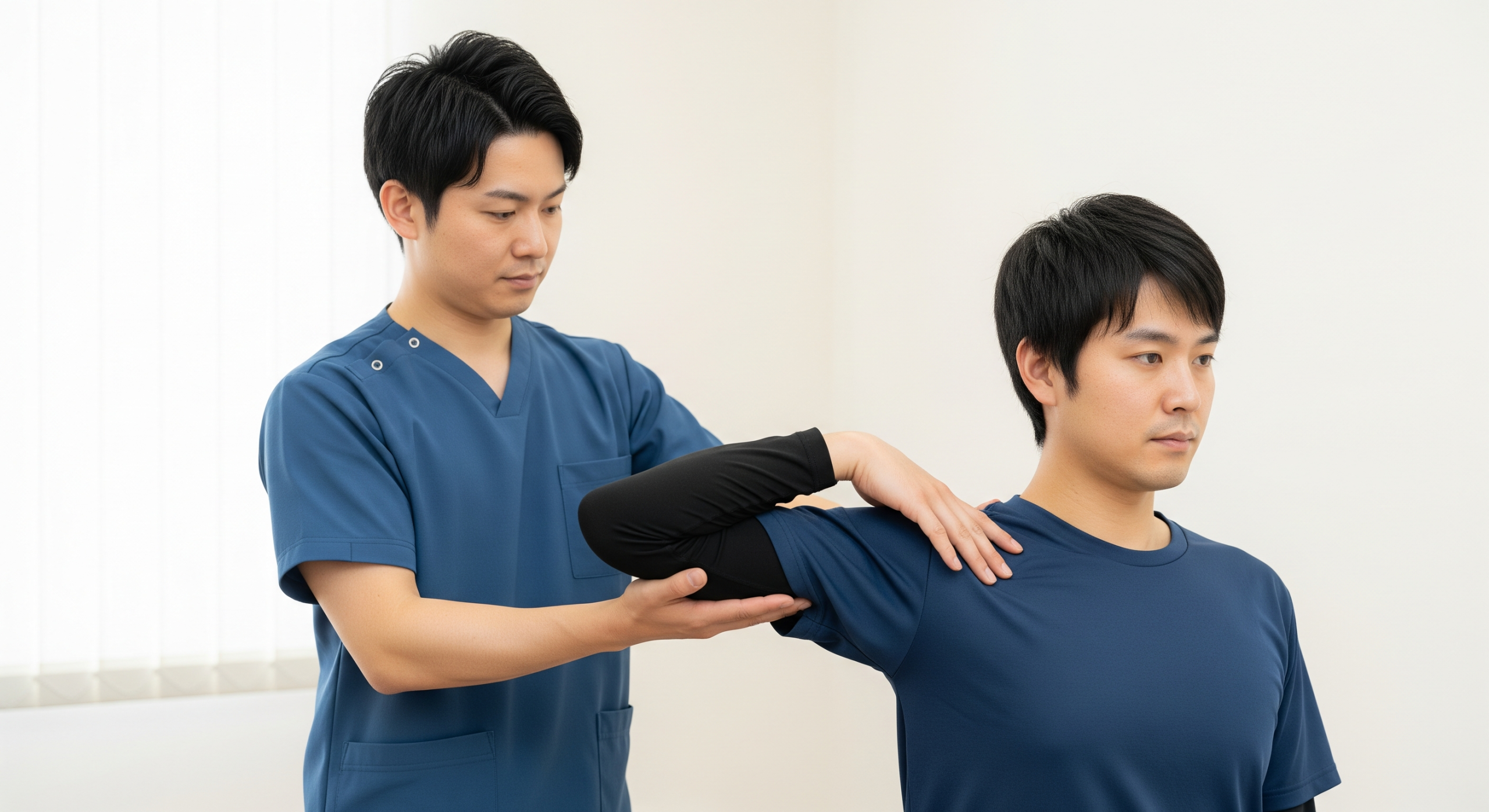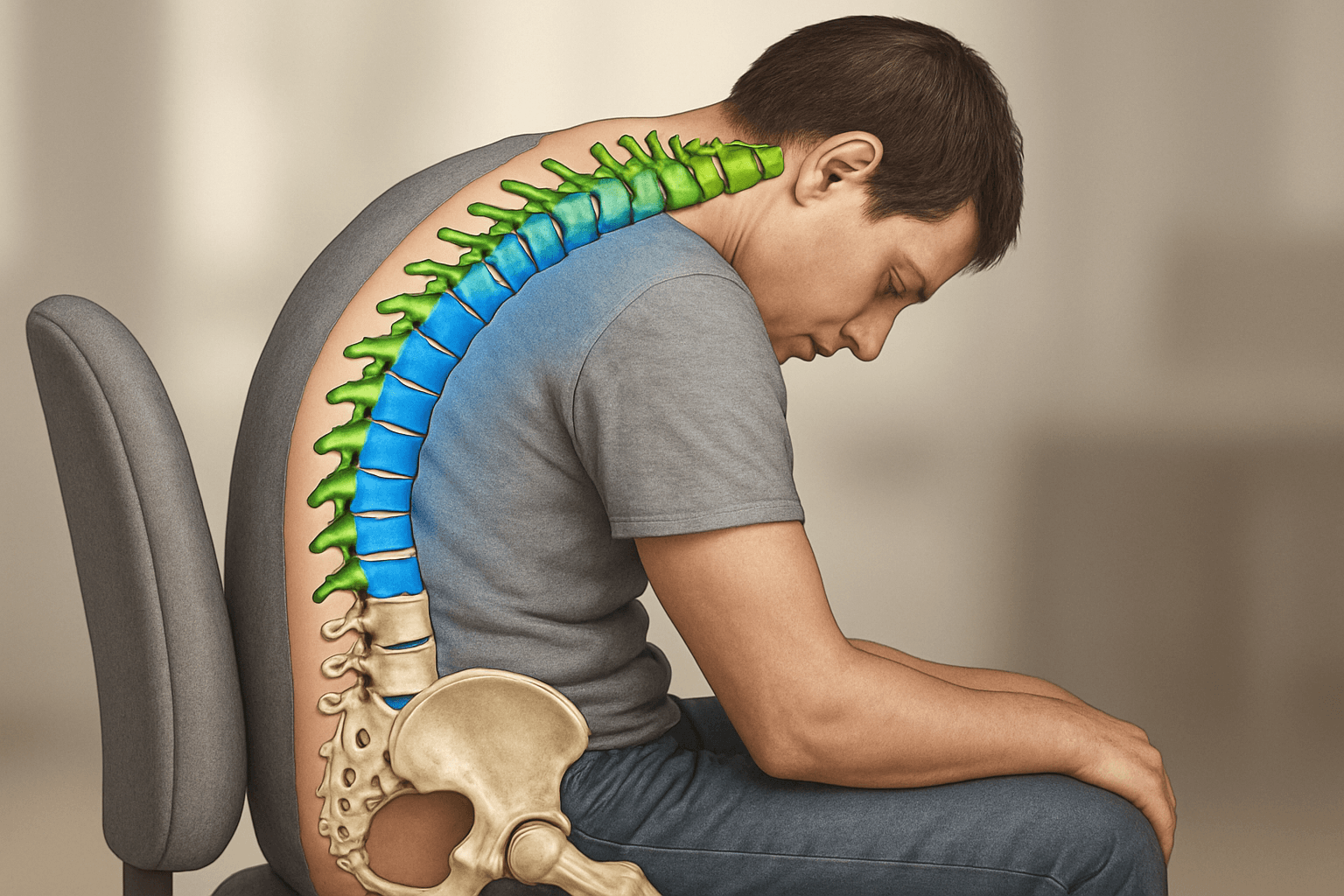
Stiffness is a sensation most people experience occasionally. It may appear after sitting for several hours, completing unfamiliar exercise, sleeping awkwardly, or spending a day performing repetitive movements.
Chronic or recurrent stiffness is different. You might notice the same area tightening every morning, after every workday, or shortly after you finish stretching. Some people also notice that stiffness is concentrated on one side or accompanied by reduced movement, aching, or a feeling that they continually need to stretch.
That pattern does not automatically mean something is seriously wrong, but it does suggest that repeatedly stretching the uncomfortable area may not address every contributing factor.
For example, a stiff-feeling upper back may coexist with long periods of desk work and limited movement. Tight-feeling hips may develop in someone who spends much of the day sitting and then suddenly asks their body to perform demanding exercise. Recurring stiffness may also occur alongside joint problems, previous injuries, or other health conditions.
Understanding the potential cause is more useful than simply trying to stretch harder.
Jump To:
- TLDR Quick Guide
- Prolonged Sitting and Inactivity Can Make the Body Feel Stiff
- Repetitive Movement Can Create Persistent Tightness
- Postural Habits May Contribute to Recurring Stiffness
- Muscle Weakness Can Sometimes Feel Like Tightness
- Previous Injuries May Change How You Move
- Joint Mobility Can Influence How Stiff You Feel
- Exercise Can Cause Stiffness When Recovery Is Insufficient
- Stress Can Contribute to Muscle Tension
- Stretching Technique Can Be Part of the Problem
- Structural Compensation Is One Possible Perspective
- When Chronic Stiffness May Need Professional Assessment
- How to Approach Chronic Stiffness More Strategically
- Key Takeaways
- Frequently Asked Questions
TLDR Quick Guide
Common Reasons Stiffness Keeps Returning
If stretching provides only temporary relief, consider whether one or more of these factors could be contributing:
- Long periods of sitting or physical inactivity
- Repetitive movements and occupational demands
- Limited movement variety throughout the day
- Postural habits and sustained positions
- Muscle weakness or reduced physical conditioning
- Previous injuries and altered movement patterns
- Joint-related mobility restrictions
- Exercise overload or inadequate recovery
- Stress and persistent muscle tension
- Age-related changes in muscles and joints
- Certain medical or inflammatory conditions
- Stretching an area without addressing the broader movement pattern
Stretching can improve flexibility and provide short-term relief for some people, but it is not a universal solution for every form of stiffness. Upright Posture has also discussed why stretching alone may not fix posture when other structural, movement, or lifestyle factors are involved.
Prolonged Sitting and Inactivity Can Make the Body Feel Stiff
Staying in One Position Reduces Movement Variety
Modern routines often require people to remain in relatively fixed positions for long periods. Office work, commuting, studying, gaming, and extended screen use can all reduce how frequently the body moves through different ranges.
After several hours at a desk, standing up may make the hips, lower back, shoulders, or neck feel restricted. The instinctive response is often to stretch.
A stretch may feel good because it introduces movement after a prolonged period of relative inactivity. However, returning immediately to the same position for several more hours may allow the sensation to return.
The issue may therefore be less about needing one particularly powerful stretch and more about needing greater movement variety throughout the day.
Movement Breaks Can Matter as Much as a Stretching Session
Rather than relying exclusively on a long stretching routine before or after work, consider how much movement occurs during the hours in between.
Regularly changing position, standing, walking, and moving through comfortable ranges can break up long periods of stillness. Even relatively short movement breaks can make a sedentary day less physically monotonous.
Your workstation matters as well. A setup that repeatedly encourages you to remain in an uncomfortable position can contribute to recurring discomfort regardless of how diligently you stretch afterward.
Repetitive Movement Can Create Persistent Tightness
Stiffness Is Not Limited to Sedentary People
Physical activity does not automatically protect someone from stiffness.
A person can be highly active while still repeating a relatively narrow set of movements. Golfers repeatedly rotate in a preferred direction, tradespeople may use the same tools for hours, and athletes often perform highly specific movement patterns during training.
Over time, certain tissues may be loaded more frequently than others.
This does not mean repetitive movement is inherently harmful. The concern is whether your routine provides sufficient variation, strength, mobility, and recovery to tolerate those repeated demands comfortably.
Your Daily Routine Provides Useful Clues
When investigating chronic stiffness causes, ask when the sensation becomes most noticeable.
Does your neck tighten after computer work? Do your hips feel stiff after driving? Does your back become uncomfortable after gardening or lifting? Does one shoulder feel different after repeatedly performing the same task?
Patterns like these can provide useful information about what repeatedly precedes the stiffness.
Instead of asking only, “What should I stretch?” ask, “What am I repeatedly doing before this area begins to feel stiff?”
Postural Habits May Contribute to Recurring Stiffness
Posture Is Dynamic, Not One Perfect Position
Posture is sometimes treated as though there is one ideal position everyone must maintain throughout the day. Human bodies are designed to move, however, and remaining rigidly in any single posture for prolonged periods can become uncomfortable.
The more useful goal is often having the capacity to change positions comfortably.
Problems may arise when someone’s routine repeatedly places them in a narrow range of positions and they have limited opportunities to move out of them. The neck, shoulders, back, and hips are common areas where people notice the effects of sustained positions.
If recurring stiffness appears alongside noticeable postural concerns, a broader posture correction assessment may help explore how the body is positioning and moving as a whole.
Stretching One Muscle May Not Change a Habitual Pattern
Imagine stretching your chest every evening because your shoulders feel rounded after work.
The stretch may temporarily make the area feel more open. But if you then spend another eight hours the following day in essentially the same working position, the original sensation may return.
This is why persistent problems often require a combination of strategies rather than endlessly increasing stretching volume.
Your working environment, movement frequency, strength, exercise habits, and overall movement capacity can all deserve attention.
Muscle Weakness Can Sometimes Feel Like Tightness
A Tight Sensation Does Not Always Mean a Muscle Is Simply Too Short
People commonly interpret stiffness as evidence that a muscle needs to be lengthened.
The relationship is more complicated.
Muscles also need sufficient strength and endurance to handle the demands placed on them. When a region becomes fatigued or poorly conditioned for a particular task, it may feel tense, tired, uncomfortable, or restricted.
Continuously stretching that area without considering strength or workload may therefore provide incomplete results.
Mobility and Stability Work Together
Healthy movement involves more than flexibility.
A joint needs an appropriate range of motion, but the body also needs enough control and strength to use that range effectively. This is why exercise programmes often combine mobility work with progressive strengthening rather than treating the two as completely separate goals.
For someone experiencing persistent stiffness, the appropriate balance depends on the underlying problem.
That is another reason a one-size-fits-all stretching routine can fall short.
Previous Injuries May Change How You Move
The Body May Adapt During Recovery
After an injury, people often temporarily change how they move.
Someone with a painful ankle may shorten their stride. Someone protecting a shoulder may use the opposite arm differently. Back discomfort may cause someone to move more cautiously or avoid certain positions.
These adaptations can be useful during recovery.
Problems can arise when altered movement continues after the original injury has improved, or when strength and mobility have not fully returned.
The Stiff Area May Not Be the Original Problem Area
Because the body functions as an interconnected movement system, the place that feels stiff is not always where the original issue began.
For example, changes in walking after a lower-limb injury may alter loading elsewhere. Likewise, protecting an uncomfortable shoulder may change how the upper back and neck move.
This does not mean every old injury inevitably causes distant problems.
It does mean injury history can be relevant when persistent stiffness has no obvious explanation.
Joint Mobility Can Influence How Stiff You Feel
Muscles Are Only One Part of Movement
When people feel stiff, they naturally focus on muscles.
But movement also depends on joints and the tissues surrounding them. If a joint does not move comfortably through the range required for a task, nearby areas may have to adapt.
Repeatedly stretching the surrounding muscles may not substantially change a joint-related restriction.
This becomes particularly important when stiffness is persistent, worsening, or associated with swelling, significant pain, reduced function, or noticeable changes in joint movement.
Age Can Change Mobility Too
It is normal for aspects of physical capacity to change over time.
Activity level, previous injuries, muscle strength, joint health, and age-related changes can all influence how freely someone moves.
Age itself should not be treated as an explanation for every symptom, however.
New or persistent stiffness deserves attention based on its characteristics rather than simply being dismissed as “getting older.”
Exercise Can Cause Stiffness When Recovery Is Insufficient
More Training Is Not Always Better
Exercise is important for maintaining strength and mobility, but training creates physical stress that requires recovery.
Increasing running mileage, starting a new gym programme, dramatically increasing weights, or returning to sport after a long break can leave muscles feeling sore or stiff.
Occasional post-exercise stiffness is common.
If you consistently feel restricted and never seem to recover between sessions, however, consider whether training volume, intensity, technique, sleep, or recovery needs adjustment.
Stretching Cannot Replace Recovery
A long stretching session does not erase excessive training load.
Recovery involves adequate rest, nutrition, hydration, sleep, and sensible progression of exercise demands.
If your body is continually being asked to perform beyond its current capacity, stretching may temporarily change how you feel without solving the workload problem.
Pay attention to trends rather than individual days.
Persistent deterioration deserves a different response from ordinary stiffness following an unfamiliar workout.
Stress Can Contribute to Muscle Tension
Physical Stiffness Can Have More Than a Mechanical Component
Stress is not purely psychological in how it is experienced.
People under sustained stress may notice that they clench their jaw, elevate their shoulders, breathe differently, or hold tension through the neck and upper back.
That tension can contribute to feelings of tightness or discomfort.
A person might repeatedly stretch these areas without considering why the muscles are becoming tense again.
Look at the Whole Routine
If stiffness becomes noticeably worse during stressful periods, that pattern is worth recognising.
Physical activity, adequate sleep, relaxation strategies, changes in workload, and appropriate professional support can all form part of a broader response depending on the circumstances.
This is not an argument that persistent physical symptoms are “just stress.”
Rather, stress can be one contributor among several.
Stretching Technique Can Be Part of the Problem
More Intensity Does Not Automatically Produce Better Mobility
When a stretch stops producing the desired result, some people respond by pushing harder.
Aggressive stretching can be uncomfortable and is not necessarily more effective. If the movement causes sharp pain, numbness, tingling, or other concerning symptoms, forcing farther into the position is particularly inappropriate.
Stretching should have a clear purpose.
Know which movement you are trying to improve and why that movement matters to your activities.
Random Stretching Makes Progress Difficult to Measure
A routine involving dozens of stretches can feel productive while making it difficult to determine which exercises are actually useful.
A more focused approach allows you to monitor whether a particular movement is improving over time.
Measure function as well as sensation.
Can you turn your head more comfortably? Can you reach overhead more easily? Does sitting become uncomfortable later than it previously did? Can you perform your sport or daily activity with less restriction?
Those changes can be more meaningful than how flexible you feel immediately after stretching.
Structural Compensation Is One Possible Perspective
The Body Can Adapt Around Movement Restrictions
When movement in one region becomes limited or uncomfortable, people may alter how they position or move elsewhere.
These adaptations are commonly described as compensations.
For example, someone may shift weight, rotate differently, or rely more heavily on one side during certain tasks. Whether those patterns are clinically important depends on the individual and should not be assumed from appearance alone.
Upright Posture approaches some persistent postural and movement concerns through Advanced BioStructural Correction™, a technique the clinic uses to assess structural alignment and compensatory patterns.
It is important to distinguish this clinic-specific treatment approach from a universal explanation for chronic stiffness. Persistent symptoms can have numerous causes, and an appropriate assessment should consider the broader clinical picture.
When Chronic Stiffness May Need Professional Assessment
Persistent Symptoms Should Not Automatically Be Self-Treated Forever
Many episodes of ordinary stiffness improve with movement, activity modification, or time.
However, persistent or unexplained stiffness may warrant professional assessment, particularly when it interferes with normal activities or continues to worsen.
Assessment becomes more important when stiffness accompanies symptoms such as:
- Significant or worsening pain
- Joint swelling, warmth, or redness
- Persistent numbness or tingling
- Weakness
- Difficulty walking or performing normal tasks
- Symptoms following significant trauma
- Fever or unexplained illness
- Pronounced morning stiffness that repeatedly lasts a long time
- Symptoms that continue despite reasonable self-management
The appropriate professional depends on the symptoms and circumstances. When potentially medical causes are involved, a GP or other qualified healthcare professional can determine whether further investigation is necessary.
How to Approach Chronic Stiffness More Strategically
Step 1: Identify the Pattern
Keep track of when stiffness appears.
Note the location, time of day, activities preceding it, duration, and what improves or worsens the sensation.
Patterns can reveal more than repeatedly testing random stretches.
Step 2: Review Your Daily Movement
Consider how much of the day is spent sitting, standing, driving, performing repetitive tasks, or maintaining similar positions.
Then look for realistic opportunities to add movement variety.
Step 3: Examine Training and Recovery
If you exercise regularly, consider whether your current workload matches your conditioning.
Sudden increases in intensity or volume can matter.
Step 4: Consider Strength as Well as Flexibility
Ask whether the area needs only more range of motion or whether strength, endurance, and movement control may also deserve attention.
A qualified professional can help determine which is appropriate.
Step 5: Stop Chasing Temporary Sensations
A stretch feeling good for ten minutes does not necessarily mean it is addressing the underlying reason the stiffness returns.
Evaluate whether your function is actually improving over days and weeks.
Step 6: Seek Assessment When the Pattern Persists
If stiffness repeatedly returns, significantly restricts movement, or occurs alongside concerning symptoms, obtain an appropriate assessment rather than continually increasing self-treatment.
Understanding what is contributing to the problem creates a better foundation for deciding what to do next.
Key Takeaways
What to Remember About Chronic Stiffness Causes
- There is no single explanation for persistent stiffness.
- Stretching can be useful without addressing every reason an area repeatedly feels tight.
- Prolonged sitting and limited movement variety can contribute to recurring stiffness.
- Repetitive physical activity can also produce persistent tightness.
- Postural habits may influence how certain areas are repeatedly loaded.
- A sensation of tightness does not always mean a muscle simply needs to be stretched farther.
- Strength, endurance, mobility, and movement control all contribute to physical function.
- Previous injuries can influence movement patterns during and after recovery.
- Joint-related restrictions may not respond to muscle stretching alone.
- Training load and inadequate recovery can contribute to persistent stiffness.
- Stress may increase muscle tension in some people.
- Aggressive or random stretching is not necessarily more effective.
- Persistent, unexplained, worsening, or neurologically associated symptoms deserve appropriate professional assessment.
- The goal should be understanding the pattern behind the stiffness rather than repeatedly chasing temporary flexibility.
Frequently Asked Questions
Why am I always stiff even though I stretch every day?
Daily stretching may temporarily improve how an area feels without addressing other contributors such as prolonged sitting, repetitive activity, strength deficits, joint limitations, training load, or stress. Persistent stiffness can also have medical or musculoskeletal causes that cannot be identified from the sensation alone. If the problem continues or interferes with normal activity, an appropriate professional assessment can help determine what is contributing to it.
Can poor posture cause chronic stiffness?
Sustained or repetitive postures may contribute to discomfort and stiffness, particularly when someone spends long periods with little movement variation. However, posture is only one potential factor, and there is not one universally perfect posture that prevents pain or stiffness. Activity levels, physical capacity, previous injuries, stress, joint health, and other factors should also be considered.
Why does stretching make me feel better only temporarily?
Stretching introduces movement and can temporarily change the sensation of tension or improve range of motion. If the original contributor remains—such as hours of sitting, repetitive loading, insufficient strength, or an underlying joint issue—the sensation may return. Longer-lasting improvement therefore may require addressing the broader pattern rather than repeatedly stretching the same area.
Is chronic stiffness always caused by tight muscles?
No, feeling stiff does not prove that a muscle is physically shortened or that stretching is necessarily the solution. Joint mobility, physical conditioning, previous injury, activity levels, stress, and some medical conditions can all influence stiffness. Determining the likely cause is particularly important when symptoms are persistent, severe, or accompanied by other changes.
When should I be concerned about persistent stiffness?
Consider seeking professional advice when stiffness persists without a clear explanation, progressively worsens, substantially limits normal activity, or repeatedly fails to improve with reasonable self-care. Symptoms such as significant swelling, weakness, numbness, tingling, fever, severe pain, or problems following substantial trauma deserve additional attention. A qualified healthcare professional can assess the complete symptom pattern and advise whether further investigation or treatment is appropriate.