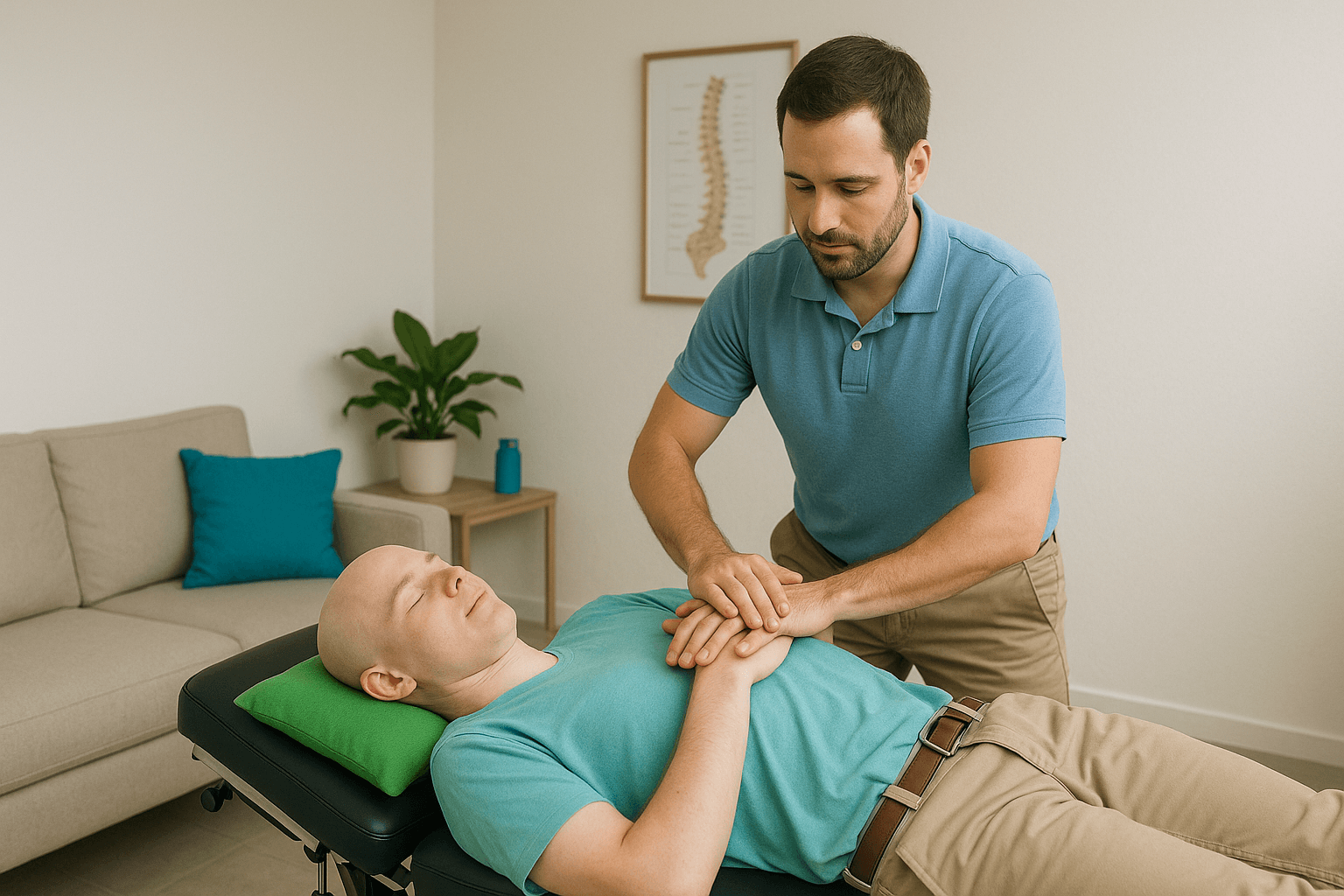
Many people seeking osteopathy Birmingham pain relief expect lasting improvement after a few sessions. While osteopathy can be effective for mobility and short-term symptom management, some patients find their chronic pain repeatedly returns. Understanding why this happens requires looking beyond surface-level treatment and examining deeper structural factors that influence long-term pain patterns.
Jump To:
- TLDR Quick Guide
- Understanding Chronic Pain vs. Acute Pain
- Why Osteopathy May Provide Temporary Relief
- Structural Imbalance as a Root Cause
- Why Chronic Pain Often Requires Structural Correction
- When Patients Seek Multiple Providers
- How to Know If Your Pain Is Structural
- Long-Term Outcomes vs. Short-Term Relief
- Key Takeaways
- FAQs
TLDR Quick Guide
- Osteopathy Birmingham pain relief can help symptoms but may not fix root causes.
- Chronic pain often stems from long-standing structural imbalances.
- Temporary relief doesn’t equal correction.
- Recurrent pain signals deeper mechanical issues.
- Structural approaches may provide longer-lasting outcomes.
Understanding Chronic Pain vs. Acute Pain
Acute pain is reactive
Acute pain usually results from a recent injury or strain. The body responds with inflammation and protective muscle guarding. Osteopathic techniques often address this stage effectively.
Chronic pain becomes structural
When pain persists for months or years, the body adapts. Muscles shorten, joints compensate, and posture shifts. At this stage, treatment must address structural imbalance—not just soft tissue tension.
Why Osteopathy May Provide Temporary Relief
Muscle release doesn’t equal correction
Osteopathy often focuses on joint mobilization and muscle relaxation. This can reduce discomfort temporarily. However, if underlying structural misalignment remains, the body reverts to its habitual position.
Recurring tension patterns
Patients frequently report feeling better for days or weeks, only to experience pain again. This cycle suggests the root cause hasn’t been fully corrected. Symptom relief without structural change can create dependency on repeat sessions.
For more context, see this overview of Osteopathy in Birmingham.
Structural Imbalance as a Root Cause
Postural distortion over time
Long-standing posture shifts—such as forward head posture or pelvic tilt—create uneven load distribution. The body compensates continuously. These compensations eventually lead to chronic pain.
Compensation chains
Pain rarely originates where it is felt. A shoulder issue may stem from spinal imbalance. A hip problem may begin with pelvic misalignment.
This deeper relationship between structure and symptoms is discussed further in Chronic Pain Relief.
Why Chronic Pain Often Requires Structural Correction
Stability over mobility
While mobility is important, stability determines long-term comfort. If the spine and posture remain unbalanced, movement corrections alone won’t hold. Structural alignment supports lasting change.
Breaking the compensation cycle
Chronic pain persists because the body adapts to imbalance. Structural correction addresses foundational alignment. This reduces the need for constant symptom management.
Clinics like Upright Posture focus on structural approaches that aim to reduce repeated recurrence rather than simply managing flare-ups.
When Patients Seek Multiple Providers
The “treatment hopping” pattern
Many chronic pain patients try physiotherapy, massage, osteopathy, and chiropractic sequentially. Each may provide temporary benefit. Without structural resolution, symptoms return.
Expectation vs. mechanism
Patients often expect pain relief without understanding the underlying mechanical drivers. Education is critical. Knowing the difference between relief and correction changes decision-making.
For additional perspective, see Best Osteopath in Birmingham.
How to Know If Your Pain Is Structural
Pain that returns predictably
If symptoms improve briefly but reappear in the same location, structure may be involved. This is a common sign of unresolved imbalance. Consistency indicates pattern.
Pain that shifts location
Sometimes pain “moves” after treatment. This often reflects compensation changes. Structural correction aims to stabilize the system overall.
Long-Term Outcomes vs. Short-Term Relief
Measuring success differently
Short-term pain reduction is not the only success metric. Long-term structural improvement reduces dependency on ongoing treatment. Sustainable relief becomes the goal.
Patient empowerment
Understanding the structural basis of pain helps patients choose appropriate care. Informed decisions reduce frustration. Education supports better outcomes.
Key Takeaways
- Osteopathy Birmingham pain relief may reduce symptoms but not always resolve chronic pain.
- Chronic pain often reflects structural imbalance.
- Temporary relief differs from structural correction.
- Recurring pain patterns suggest deeper causes.
- Addressing alignment can reduce long-term recurrence.
FAQs
Why does my pain return after osteopathy sessions?
Temporary relief often addresses muscle tension, not structural alignment. If posture remains imbalanced, symptoms can recur. Persistent patterns indicate deeper causes.
Is osteopathy ineffective for chronic pain?
Not necessarily. It can help with mobility and short-term relief. However, chronic structural issues may require additional approaches.
How do I know if my pain is structural?
Recurring pain in the same area is one sign. Postural imbalances and long-standing issues often suggest structural involvement. A thorough assessment is necessary.
Can structural correction replace other therapies?
In some cases, yes. When root causes are addressed, fewer supportive treatments may be needed. Each patient’s situation is unique.
Should I stop osteopathy if pain keeps returning?
It depends on your goals and response to care. If pain consistently returns, exploring structural assessment may help. A clear diagnosis supports better treatment decisions.