Posture is rarely perfectly symmetrical. Most people naturally stand, sit, and move with small differences between the left and right sides of their body, and minor variations do not automatically indicate a problem.
However, a postural difference becomes more relevant when it is persistent, progressively noticeable, associated with discomfort, or begins affecting everyday movement. One shoulder may consistently sit higher, the pelvis may appear uneven, the head may drift forward, or body weight may repeatedly shift toward one side.
Understanding common posture imbalance causes can help explain why these patterns develop. Daily habits, prolonged positions, repetitive activities, previous injuries, mobility restrictions, strength differences, structural characteristics, and compensatory movement can all potentially contribute.
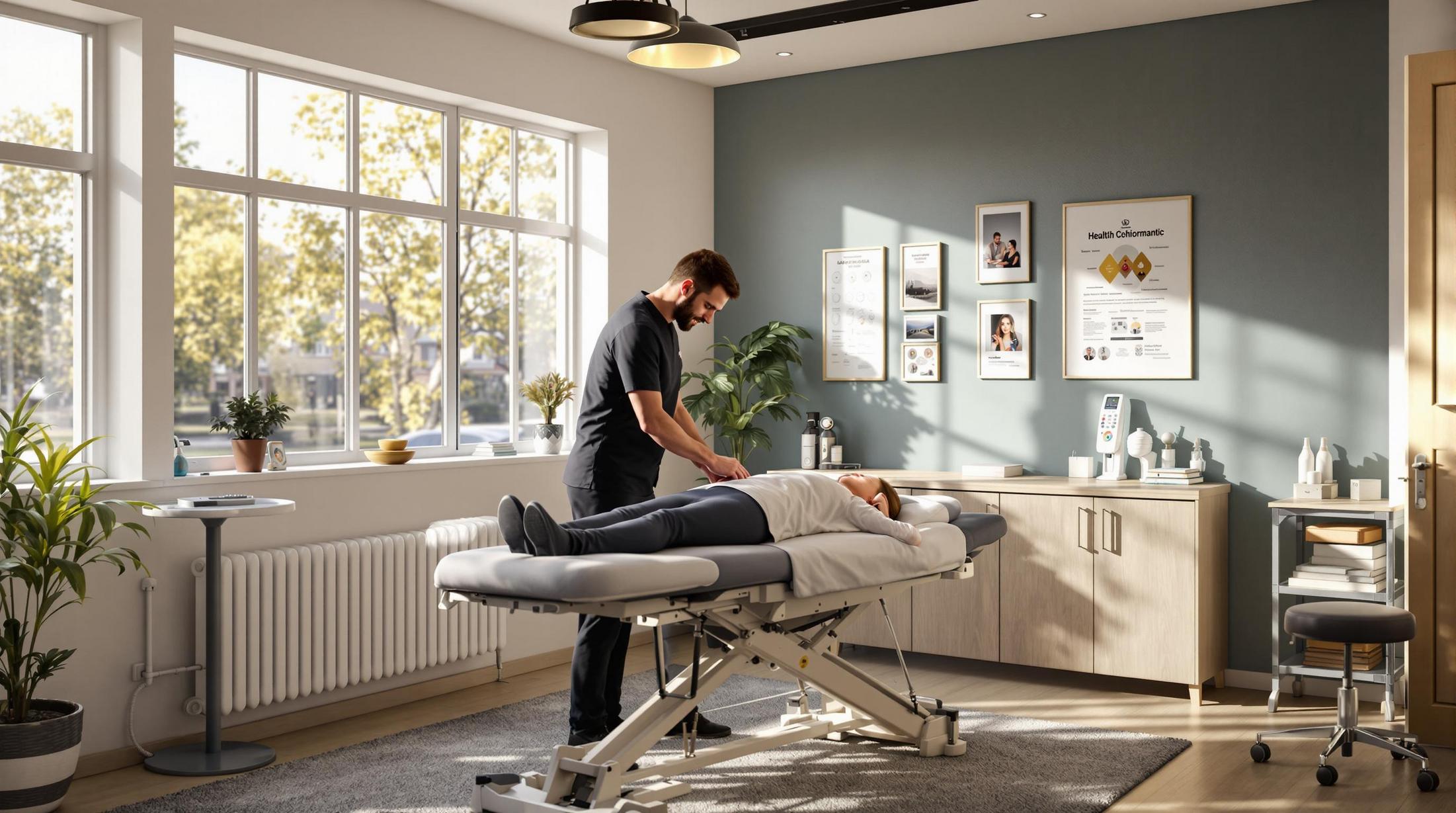
The important point is that posture should not be evaluated from appearance alone. A comprehensive assessment considers how your body stands and how it moves, what symptoms are present, how long the pattern has existed, and whether an underlying condition requires further investigation.
Jump To:
- TLDR Quick Guide
- What Is a Posture Imbalance?
- 1. Prolonged Sitting and Sedentary Habits
- 2. Computer and Smartphone Habits
- 3. Repetitive Daily Activities
- 4. Strength and Muscular Endurance Differences
- 5. Joint Mobility Restrictions
- 6. Previous Injuries
- 7. Habitual Weight Shifting
- 8. Structural Differences and Scoliosis
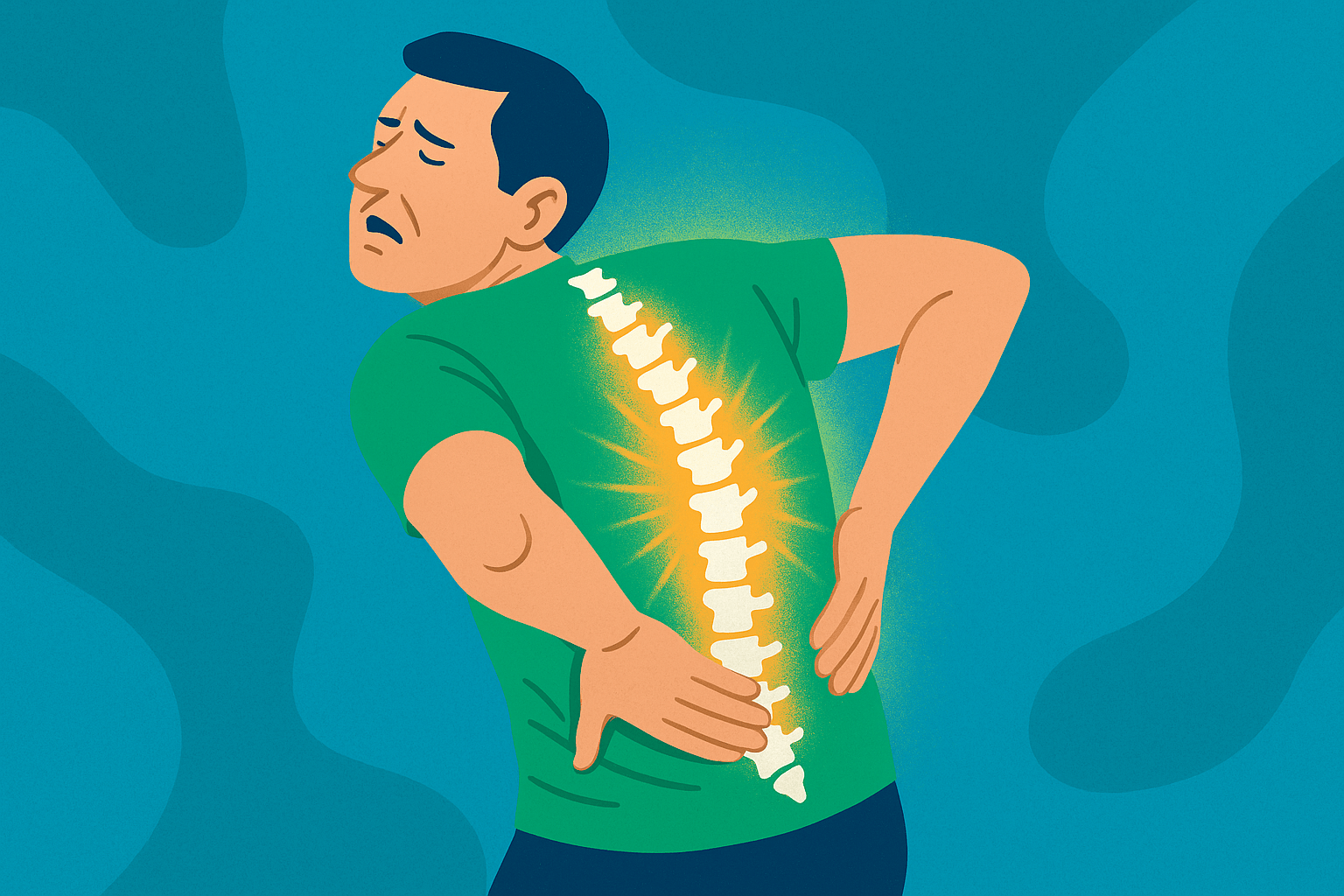
- 9. Pain Can Change Posture
- 10. Foot and Lower-Limb Mechanics
- How Posture Imbalances May Affect the Body
- How Posture Imbalances Are Assessed
- What Can You Do About a Posture Imbalance?
- Where Advanced BioStructural Correction Fits
- When a Posture Change Needs Medical Attention
- Key Takeaways
- Frequently Asked Questions
TLDR Quick Guide
What Can Cause a Posture Imbalance?
Common factors associated with postural imbalances can include:
- Prolonged sitting and sedentary routines
- Repetitive occupational positions
- Habitually shifting weight onto one leg
- Extended computer or smartphone use
- Differences in strength or muscular endurance
- Restricted joint mobility
- Previous injuries and protective movement patterns
- Poorly configured workstations
- Repetitive sports and hobbies
- Differences in spinal or skeletal structure
- Foot and lower-limb mechanics
- Pain-related compensation
- Certain neurological or musculoskeletal conditions
Postural imbalance may be associated with stiffness, fatigue, altered movement, reduced mobility, or discomfort in some people. However, posture alone does not prove what is causing pain, which is why persistent or significant problems deserve an individual assessment rather than self-diagnosis.
What Is a Posture Imbalance?
Posture Is More Than Standing Straight
Posture describes how different parts of your body relate to one another while you sit, stand, and move.
It isn’t a single rigid position that everyone must reproduce perfectly. Healthy people naturally vary in spinal curves, shoulder position, pelvic alignment, stance, and movement patterns.
A postural imbalance generally describes a noticeable or persistent difference in alignment or loading.
Examples might include:
- One shoulder sitting higher
- The head consistently drifting forward
- Uneven weight distribution
- The trunk leaning toward one side
- A visibly uneven pelvis
- Rounded shoulders
- Excessive or altered spinal curvature
- Repeatedly standing on the same leg
The presence of one of these patterns doesn’t automatically mean something is wrong. Context matters.
Static and Dynamic Posture Are Different
Someone may look relatively symmetrical while standing still but move asymmetrically when walking, bending, squatting, or reaching.
The reverse can also happen.
That is why evaluating posture from a single photograph has limitations. A more useful assessment considers static posture alongside mobility, movement, symptoms, previous injuries, daily activities, and functional limitations.
1. Prolonged Sitting and Sedentary Habits
Staying in One Position for Too Long
Modern life encourages people to remain stationary for long periods.
Office work, driving, studying, gaming, and television can keep the body in relatively similar positions for hours. The issue isn’t necessarily that sitting itself is inherently harmful; remaining in one position without sufficient movement or variation may contribute to stiffness and discomfort.
People also tend to drift toward positions requiring less active muscular effort.
That might mean:
- Slouching into a chair
- Leaning toward one armrest
- Crossing the same leg repeatedly
- Sliding forward in the seat
- Moving the head toward the screen
Repeated over time, these habits may influence how comfortable other positions feel.
Movement Variety Matters
Instead of obsessing over maintaining a theoretically perfect sitting position all day, introduce more movement.
Stand periodically. Walk. Change positions. Adjust your workstation when necessary.
The body generally benefits from movement variety rather than trying to remain completely motionless in one supposedly ideal posture for eight hours.
2. Computer and Smartphone Habits
Screens Can Influence Head and Upper-Body Position
Screen placement can influence how you organise your upper body.
When a monitor is too low, text is difficult to see, or a laptop encourages downward viewing, you may gradually bring your head closer to the screen. Smartphone use can similarly involve prolonged periods looking downward.
Forward head position is often accompanied by changes elsewhere.
The upper back may round, the shoulders may move forward, and the neck may remain in sustained positions for extended periods.
These adaptations don’t mean using a phone inevitably damages your posture. Frequency, duration, movement variety, individual anatomy, activity levels, and many other factors influence how your body responds.
Workstation Setup Can Reduce Unnecessary Strain
A workstation should support comfortable movement rather than force you into one rigid position.
Consider monitor height, chair support, desk height, keyboard and mouse position, and how frequently you change posture.
Even an excellent ergonomic setup cannot compensate completely for remaining stationary all day.
Movement breaks remain important.
3. Repetitive Daily Activities
Your Body Adapts to What You Repeatedly Ask It to Do
Many daily activities are asymmetrical.
You may carry a child on the same hip, hold a phone with the same hand, carry a work bag over one shoulder, or repeatedly reach toward one side of a workstation.
None of these actions automatically causes a postural disorder.
However, repeated loading patterns can become relevant when combined with limited movement variety, weakness, stiffness, previous injuries, or pain.
Occupational Demands Can Reinforce Patterns
Postural issues aren’t limited to desk workers.
Hairdressers, drivers, healthcare workers, tradespeople, warehouse employees, musicians, and other professionals may spend considerable time in repetitive or sustained positions.
Understanding the demands of someone’s occupation can therefore be an important part of identifying possible posture imbalance causes.
4. Strength and Muscular Endurance Differences
Posture Requires Ongoing Muscular Support
Muscles help maintain position and control movement.
If certain muscles fatigue quickly or if there are meaningful strength differences between sides, maintaining comfortable alignment during prolonged activity may become more difficult.
This doesn’t necessarily mean that one “weak muscle” is responsible for someone’s entire posture.
Human movement is more complicated than that.
Multiple muscles, joints, sensory systems, habits, and environmental demands work together.
Fatigue Can Make Patterns More Obvious
You may notice your posture looks relatively balanced early in the day but changes after several hours of work.
That can be useful information.
If you increasingly lean, slump, or shift your weight as fatigue develops, muscular endurance may be one part of the picture.
Appropriate strengthening and movement training may help in some cases, particularly when exercises are selected according to the individual’s actual needs rather than generic posture assumptions.
5. Joint Mobility Restrictions
One Restricted Area Can Influence Another
Movement is interconnected.
If one joint or region does not move comfortably through the range required for an activity, the body may find another way to complete the task.
For example, restrictions involving the ankle, hip, thoracic spine, or shoulder may influence movement elsewhere.
This is often described as compensation.
Compensation isn’t automatically harmful—it is one of the ways the body continues functioning when circumstances change. Problems may arise when a compensatory strategy becomes persistent, inefficient, painful, or limits normal activity.
Mobility Should Be Assessed Rather Than Assumed
Seeing an uneven posture doesn’t tell you which joint needs stretching.
Randomly stretching whichever side appears tight can miss the actual problem.
A more useful approach evaluates relevant joint movement, strength, symptoms, and functional tasks before deciding what intervention is appropriate.
6. Previous Injuries
Protective Movement Can Persist
After an injury, people naturally alter movement to protect an uncomfortable area.
Someone with a painful ankle might place more weight on the opposite leg. A person with shoulder pain may move the trunk differently when reaching overhead.
These adaptations can be helpful during recovery.
However, the movement pattern may sometimes persist after the original problem improves.
Old Injuries Are Worth Mentioning During Assessment
An injury from years ago may or may not be relevant to your current posture.
Don’t automatically assume that an old ankle sprain explains today’s back discomfort, for example. But provide the history during an assessment so the practitioner can determine whether there is a meaningful relationship.
The timeline matters.
7. Habitual Weight Shifting
Always Standing on One Leg
Some people naturally relax by shifting most of their body weight onto the same leg.
Occasionally doing this isn’t necessarily problematic.
But if the position becomes habitual, you may begin noticing differences in how the hips, pelvis, trunk, or shoulders appear while standing.
Ask yourself whether you consistently:
- Stand on the same leg
- Carry bags on the same shoulder
- Cross the same leg
- Lean against the same side of a desk
- Hold a child on the same hip
These observations can reveal habitual asymmetries worth addressing.
Symmetry Doesn’t Need to Become an Obsession
The solution isn’t to monitor every movement and force perfect symmetry throughout the day.
Human beings aren’t perfectly symmetrical.
Instead, aim for greater movement variety and avoid relying on one comfortable position for excessive periods.
8. Structural Differences and Scoliosis
Some Postural Differences Are More Than Habits
Not every visible imbalance develops because someone sits badly.
Spinal curvature, skeletal anatomy, leg-length differences, joint structure, and conditions such as scoliosis may influence how the body appears and moves.
This distinction matters because a structural difference cannot necessarily be addressed by simply “remembering to stand straight.”
For people concerned about persistent spinal asymmetry, professional assessment is more appropriate than attempting to diagnose the cause from a mirror.
Scoliosis Requires Individual Consideration
Scoliosis involves abnormal spinal curvature and can present differently from person to person.
Shoulder height, rib position, waist symmetry, or trunk alignment may appear different, but appearance alone isn’t enough to establish a diagnosis.
Persistent or significant asymmetry should be appropriately evaluated, particularly if it is changing or accompanied by symptoms.
9. Pain Can Change Posture
Pain Can Be the Cause or the Consequence
The relationship between posture and pain is not always straightforward.
Sometimes discomfort changes how someone stands or moves. In other situations, prolonged loading or certain movement patterns may contribute to symptoms.
And sometimes pain and a visible postural difference coexist without one being the sole cause of the other.
This is why claims that a particular posture automatically causes chronic pain should be treated cautiously.
Upright Posture explores this relationship further in its discussion of postural imbalances and chronic pain.
Protective Postures Can Become Habitual
If bending one direction hurts, you may naturally avoid it.
If one leg is uncomfortable, you may shift away from it.
Over time, this can make the body’s preferred resting and movement positions look different.
Addressing the underlying reason for the pain can therefore be just as important as addressing the visible posture.
10. Foot and Lower-Limb Mechanics
Posture Starts From the Ground Up
Your feet provide the base for standing and walking.
Differences in foot mechanics, ankle mobility, knee movement, hip control, or previous lower-limb injuries may influence how forces travel through the body.
That doesn’t mean every shoulder or back problem originates in the feet.
It means the entire movement chain deserves consideration when the symptoms or postural pattern suggest that lower-body mechanics may be relevant.
Walking Can Reveal More Than Standing
Some asymmetries become much clearer during gait.
Watch for consistent limping, unusual trunk movement, difficulty bearing weight, or a noticeable difference between sides.
New or unexplained walking changes deserve professional evaluation rather than being automatically labelled as “poor posture.”
How Posture Imbalances May Affect the Body
Muscle Fatigue and Discomfort
When certain positions require some muscles to work harder for prolonged periods, fatigue can develop.
Someone might experience discomfort around the neck, shoulders, upper back, lower back, or hips.
However, pain is influenced by many factors, including activity, sleep, stress, injury, health conditions, physical capacity, and sensitivity.
Posture should therefore be viewed as one potential contributor rather than a universal explanation.
Restricted or Uncomfortable Movement
Persistent postural habits may be associated with reduced movement options.
Turning the head, reaching overhead, extending the upper back, squatting, or rotating the trunk might feel less comfortable.
The objective of care shouldn’t simply be to make someone look straighter.
Improving comfortable, confident movement and function is generally more meaningful.
Balance and Weight Distribution
Significant asymmetry can also affect how someone distributes weight between the feet.
A person might feel more stable on one side or consistently shift toward a preferred leg.
If balance changes are new, worsening, or accompanied by neurological symptoms, dizziness, weakness, or falls, they should not be assumed to result from posture alone.
How Posture Imbalances Are Assessed
Start With the Whole Person
A useful assessment should consider more than shoulder height.
Relevant information can include:
- Symptom history
- Previous injuries
- Occupation
- Exercise habits
- Daily sitting time
- Mobility
- Strength
- Balance
- Walking pattern
- Functional movements
- Static posture
- Activities that improve or worsen symptoms
At Upright Posture, posture correction is approached through assessment and an individual plan rather than assuming every person needs the same correction.
Look for Patterns Rather Than Isolated Measurements
A single observation rarely tells the complete story.
A higher shoulder might be important—or it might simply be an individual’s normal variation.
The more useful question is whether multiple findings form a consistent pattern that corresponds with symptoms, movement restrictions, or functional difficulties.
That context helps determine whether intervention is warranted.
What Can You Do About a Posture Imbalance?
Increase Movement Variety
One of the simplest strategies is to move more frequently.
If you work at a desk, change positions periodically rather than trying to maintain a rigid posture indefinitely. Stand, walk, stretch comfortably, and vary your working position when possible.
If your job involves repetitive movement, consider whether you can alternate tasks or sides.
Small changes repeated consistently may be more practical than trying to maintain “perfect posture” every minute.
Build Strength and Mobility for Your Needs
Exercise can support posture by improving strength, mobility, coordination, and physical capacity.
But exercise should match the actual problem.
A generic list of posture exercises may be less useful when someone has a significant asymmetry, previous injury, persistent pain, or a structural condition.
Individual assessment can help identify which areas actually require attention.
Address the Environment
Sometimes the easiest improvement is external.
Adjust a monitor that forces you to look downward. Move frequently used items within comfortable reach. Alternate how you carry loads.
The objective is not to design an environment where your body never has to move.
It’s to remove unnecessary repetitive strain while encouraging varied movement.
Where Advanced BioStructural Correction Fits
Looking Beyond Surface Appearance
Upright Posture uses Advanced BioStructural Correction as part of its approach to structural and postural concerns.
The clinic describes ABC™ as a method focused on identifying structural problems and addressing biomechanical patterns rather than simply asking patients to consciously hold themselves in a corrected position.
As with any healthcare approach, suitability depends on the individual.
An assessment should determine whether a particular intervention is appropriate rather than assuming every postural concern requires the same treatment.
Posture Change Should Be About Function Too
Photographic changes can be interesting, but appearance shouldn’t be the only outcome that matters.
Useful questions include:
- Can you move more comfortably?
- Can you perform daily activities more easily?
- Has your mobility changed?
- Is prolonged sitting or standing easier?
- Are relevant symptoms changing?
- Can you maintain activity with less difficulty?
Functional improvement provides valuable context alongside visible postural changes.
When a Posture Change Needs Medical Attention
Not Every Imbalance Is a Posture Problem
A new lean, sudden weakness, unexplained loss of balance, numbness, severe pain, or significant change in walking should not automatically be blamed on posture.
Some symptoms can have neurological, musculoskeletal, vestibular, or other medical causes requiring appropriate assessment.
Seek prompt medical attention for concerning or rapidly developing symptoms.
Watch for Significant Changes
Consider professional evaluation when an imbalance:
- Appears suddenly
- Progressively worsens
- Follows significant trauma
- Causes substantial or persistent pain
- Is associated with weakness or numbness
- Changes walking ability
- Is associated with unexplained balance problems
- Significantly interferes with daily activity
Posture education is useful, but it should never delay appropriate medical investigation.
Key Takeaways
Understanding Posture Imbalance Causes
Common posture imbalance causes are rarely limited to one bad habit or one weak muscle. Posture develops through an interaction between anatomy, movement, lifestyle, occupation, previous injuries, physical capacity, symptoms, and the positions you repeatedly use.
Keep these points in mind:
- Some asymmetry is normal.
- Prolonged static positions may contribute to stiffness and discomfort.
- Screen habits can influence head, neck, and shoulder positioning.
- Repetitive activities may reinforce preferred movement patterns.
- Strength and endurance differences can influence how posture changes with fatigue.
- Restricted mobility may lead the body to compensate elsewhere.
- Previous injuries can temporarily or persistently alter movement.
- Habitual weight shifting can make asymmetry more noticeable.
- Structural characteristics can influence posture independently of habits.
- Pain can change posture rather than simply being caused by it.
- Lower-limb mechanics may influence whole-body movement.
- Posture should be assessed alongside movement and symptoms.
- Treatment should focus on function and individual needs rather than appearance alone.
- Sudden or neurological changes require appropriate medical evaluation.
Understanding the cause matters more than simply trying to look straighter. When the underlying pattern is properly assessed, the next steps can be based on what your body actually needs rather than generic assumptions about “good” and “bad” posture.
Frequently Asked Questions
What are the most common posture imbalance causes?
Common contributors include prolonged sitting, repetitive activities, strength or mobility differences, habitual weight shifting, previous injuries, and individual structural characteristics. Pain can also change how someone holds or moves their body, making the imbalance a response rather than the original problem. Because several factors may coexist, assessment is more useful than assuming one habit explains everything.
Can poor posture cause pain throughout the body?
Posture and prolonged loading can contribute to discomfort for some people, but posture alone does not explain every case of neck, back, shoulder, or hip pain. Pain is influenced by many factors, including injury, activity levels, sleep, stress, physical capacity, and underlying health conditions. Persistent pain should therefore be evaluated in context rather than automatically attributed to posture.
Can a posture imbalance be corrected?
Some postural patterns can change through movement, strengthening, mobility work, environmental changes, treatment, or addressing the underlying cause. Structural differences and individual anatomy may limit how much visible symmetry can or should change. The more useful objective is often improved comfort, movement, function, and physical capacity rather than achieving visually perfect posture.
How can I tell if my posture imbalance is serious?
A long-standing minor asymmetry without symptoms may have very different significance from a sudden or rapidly worsening postural change. Seek professional assessment when an imbalance is associated with significant pain, weakness, numbness, walking changes, balance problems, trauma, or progressive symptoms. Sudden neurological symptoms require prompt medical attention rather than self-treatment for posture.
How long does it take to improve a posture imbalance?
There is no universal timeline because improvement depends on the cause, duration of the pattern, symptoms, structural factors, activity levels, and the intervention being used. Habit-related positioning may respond differently from an imbalance associated with injury, scoliosis, or another underlying condition. Consistent movement and an appropriately targeted plan are generally more meaningful than expecting a fixed number of days or treatments.