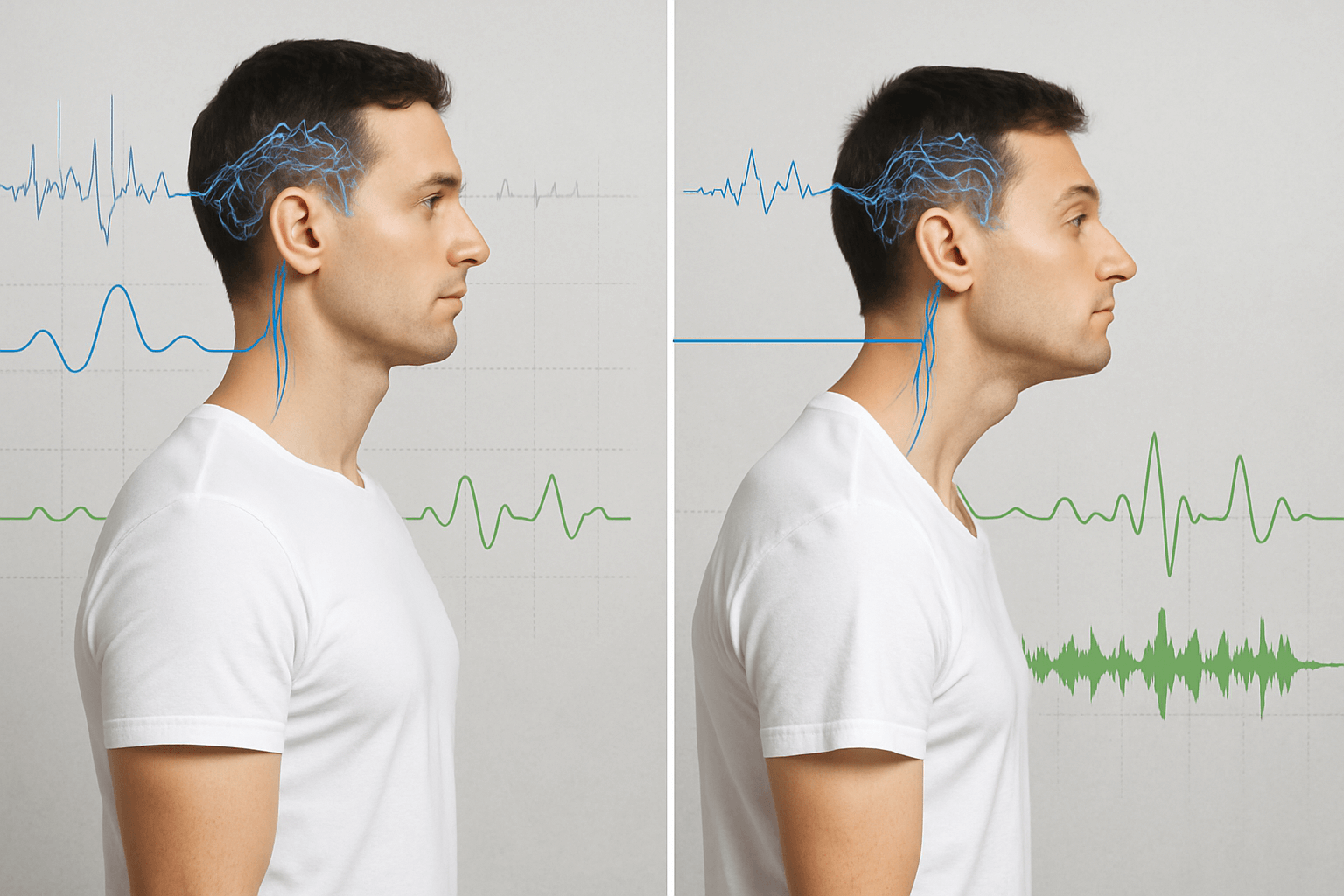
Many people assume that standing straight automatically means they should feel fine. If your shoulders are back and your spine appears aligned, pain shouldn’t exist—at least in theory. Yet countless individuals experience upright posture pain, even when they appear to have good posture.
The reason is simple but often overlooked: posture appearance and structural balance are not the same thing. Pain can persist beneath the surface even when someone looks perfectly upright.
Jump To:
TLDR Quick Guide
- Looking upright doesn’t mean your structure is balanced
- Compensations can mask deeper spinal distortions
- Pain often stems from instability, not visible posture
- Muscle tension may hide structural imbalance
- True correction requires more than standing straight
Posture vs Structural Alignment: They Are Not the Same
Appearance Can Be Deceptive
You can consciously pull your shoulders back and lift your chin. From the outside, this looks like “good posture.” But this position may be forced and muscular, not structurally stable.
When posture is held artificially, muscles are working overtime to maintain alignment. Over time, this creates fatigue and discomfort.
Compensation Patterns Hide Deeper Issues
The body is remarkably adaptive. If one area of the spine is misaligned, another region compensates to keep you upright. These compensations allow you to look straight—even when internal structural imbalance remains.
This is often why people feel pain despite looking “fine.”
Why Upright Posture Pain Still Happens
Muscles May Be Overworking
When structural alignment isn’t stable, muscles act like scaffolding. They hold the spine upright through tension rather than natural balance. Constant tension leads to stiffness, soreness, and chronic discomfort.
This is particularly common in the neck, shoulders, and lower back.
Hidden Spinal Distortion
Even subtle distortions can shift weight distribution. Uneven loading across joints increases wear and tear. Pain develops not because you are slouching, but because your structure is compensating.
Corrective approaches such as those discussed in Posture Correction Done Right highlight why superficial fixes are rarely enough.
Pain Is Often About Stability, Not Appearance
Stability vs Symmetry
A person may look symmetrical but lack internal structural stability. True structural balance allows the body to remain upright without muscular strain. When stability is missing, the nervous system signals discomfort.
Pain becomes a warning sign—not necessarily of poor posture, but of imbalance.
Nervous System Involvement
Spinal alignment directly affects nerve communication. Even slight misalignments can irritate nerve pathways. This may explain why discomfort continues despite standing upright.
Interestingly, structural balance has been linked to broader physiological effects, as explored in Can Posture Correction Improve Your Immune System?.
Why “Standing Up Straight” Isn’t a Long-Term Solution
Conscious Correction Creates Tension
When you actively hold yourself upright, you engage muscles continuously. This effort is not sustainable. Eventually, fatigue sets in and pain increases.
True correction should reduce effort—not require constant attention.
Structural Correction vs Postural Discipline
Postural discipline focuses on reminders: sit up, stand straight, pull shoulders back. Structural correction focuses on repositioning the spine so upright posture becomes natural.
Without addressing structure, reminders alone cannot resolve upright posture pain.
The Stress-Pain Connection
Emotional and Physical Load Intersect
Stress affects muscular tone. Increased tension can exaggerate compensation patterns. Even if you look upright, stress-driven tightness can amplify discomfort.
Research into posture and emotional wellbeing shows deeper links, as discussed in Can Posture Correction Reduce Stress?.
Chronic Stress Masks Structural Imbalance
Long-term stress can hardwire tension patterns. This makes discomfort feel “normal.” Without structural evaluation, many assume their pain is just part of life.
It doesn’t have to be.
When to Look Beyond Visible Posture
Persistent Pain Despite Good Habits
If you stretch, exercise, and maintain good posture but still experience pain, deeper evaluation is necessary. Recurring discomfort is rarely random. It often reflects an unresolved structural issue.
Pain That Returns Quickly
Temporary relief followed by recurring symptoms suggests compensation, not correction. True structural balance provides lasting stability.
How Structural-Based Care Differs
Evaluating the Root Cause
Instead of focusing only on symptoms, structural approaches examine spinal balance. The goal is to reduce compensation and restore natural upright stability.
Clinics such as Upright Posture emphasise structural correction methods designed to address the root cause rather than repeatedly chasing symptoms.
Long-Term Structural Stability
When structural balance improves, the body no longer relies on muscular tension to remain upright. This reduces strain and promotes more sustainable comfort.
Pain decreases not because posture is forced—but because stability is restored.
Key Takeaways
- Upright posture pain is common and often misunderstood
- Visible alignment does not guarantee structural balance
- Muscle tension can mask deeper spinal issues
- Standing straight does not equal correction
- True stability reduces effort and discomfort
FAQs
Can I have good posture and still experience back pain?
Yes, appearance alone does not guarantee structural balance. Compensation patterns may hide deeper distortions. Pain can persist even if posture looks upright.
Why does my neck hurt even though I sit up straight?
You may be holding your posture through muscular tension. This constant effort strains the neck and shoulders. Structural imbalance can remain beneath the surface.
Does stretching fix upright posture pain?
Stretching can reduce temporary tension. However, it does not correct structural distortion. Without addressing root causes, symptoms may return.
How do I know if my posture is truly stable?
Stability means you can stand upright without muscular effort. If you constantly need reminders to “stand straight,” deeper evaluation may help. Persistent pain is often a signal.
Is upright posture pain common?
Yes, many people experience discomfort despite looking aligned. It is often misunderstood as muscular weakness alone. Structural assessment provides clearer answers.