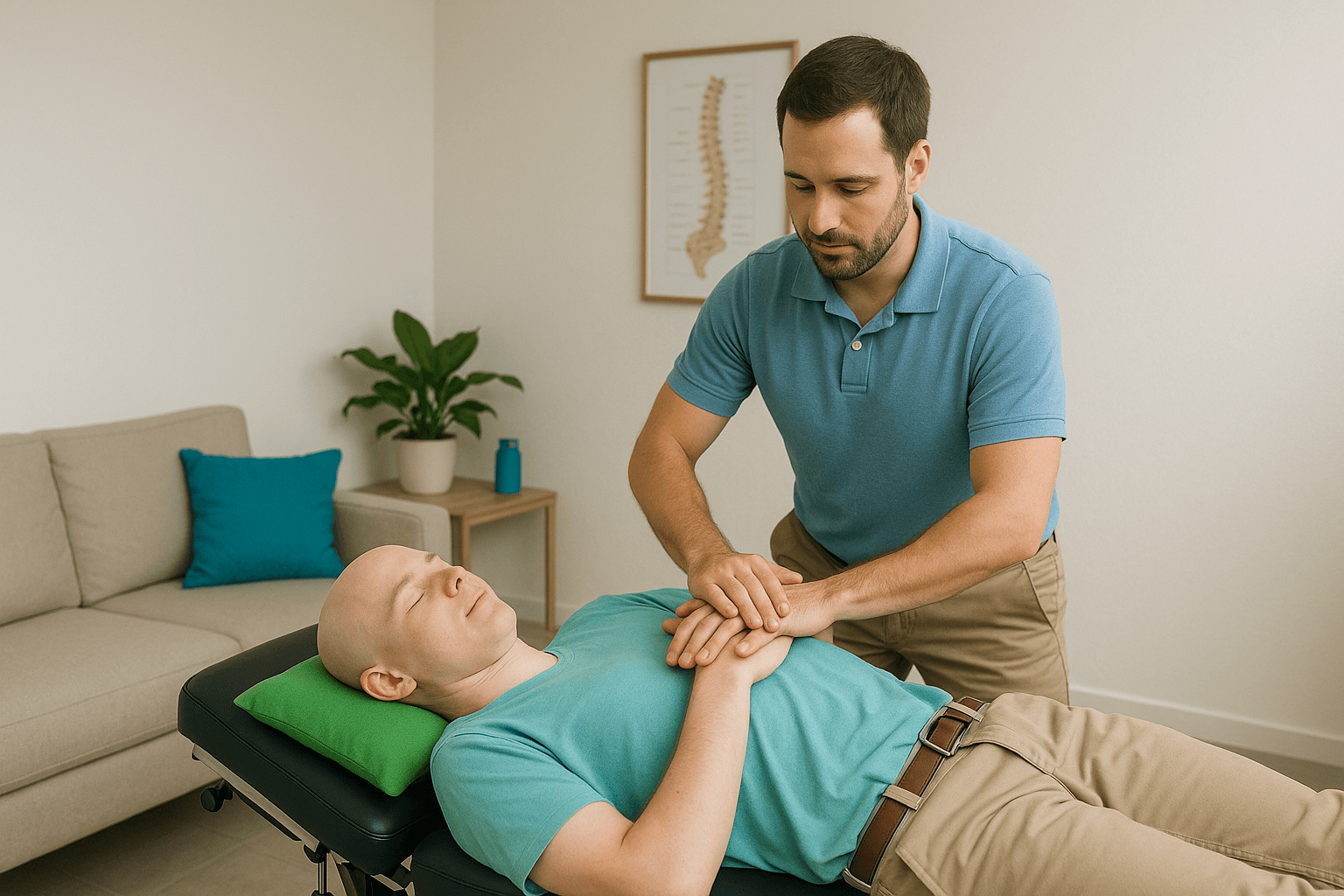
If you are beginning Advanced BioStructural Correction™ (ABC™), you may naturally wonder what happens once you leave the clinic. Does your posture change immediately? Is it normal to become more aware of certain areas of your body? What should you pay attention to before your next appointment?
Understanding what happens after ABC correction requires recognising that responses can vary considerably from person to person. Upright Posture describes ABC™ as a structural approach that identifies and addresses particular biomechanical patterns rather than focusing only on the location where discomfort is felt. The clinic also describes an ongoing process in which the body may adapt between sessions rather than treatment being viewed as a single correction with a fixed result.
Some people may notice changes in how they stand, sit, move, or perceive tension. Others may notice relatively little at first, and changes in symptoms do not necessarily follow a simple or predictable timeline. Individual experiences should not be treated as proof that a particular structural change has occurred or that a health condition has been resolved.
Understanding the clinic’s broader Advanced BioStructural Correction™ approach can provide useful context for why practitioners reassess patients over time rather than judging progress solely by how they feel immediately after one appointment.
Jump To:
- TLDR Quick Guide
- Understanding What an ABC™ Correction Is Trying to Address
- What Happens Immediately After an ABC™ Correction?
- You May Notice Changes in Movement
- Can You Feel Sore After an ABC™ Correction?
- Why Might Different Areas Feel More Noticeable?
- What Does "Unwinding" Mean in ABC™?
- Will Your Posture Look Different Straight Away?
- Why You May Have Good and Difficult Days Between Sessions
- Should You Try to Hold Your New Posture?
- Should You Exercise Between ABC™ Sessions?
- What About Sitting and Desk Work?
- What About Sleep After a Correction?
- How Long Do Changes Between Sessions Last?
- What Should You Track Between ABC™ Sessions?
- What Happens at the Next ABC™ Session?
- When Should You Contact the Clinic Before Your Next Session?
- What If You Don't Notice Anything Between Sessions?
- What If You Feel Better?
- What If You Temporarily Feel Worse?
- How to Approach the Time Between Sessions
- Setting Realistic Expectations for ABC™ Care
- Key Takeaways
- FAQs
TLDR Quick Guide
What You May Notice After an ABC™ Session
- Responses after an ABC™ correction vary between individuals.
- You may become more aware of how you stand, sit, walk, or move.
- Some people report changes in tension or comfort between appointments.
- Your posture may feel different even when you cannot immediately explain why.
- A familiar movement or position may temporarily feel unfamiliar.
- You may notice areas of tension that previously attracted little attention.
- Some people describe periods of temporary soreness after hands-on care.
- Others notice little or no obvious change after a particular session.
- Immediate sensations are not the only way to evaluate progress.
- Posture and movement patterns can be reassessed over multiple appointments.
- Upright Posture uses the term “unwinding” for part of its ABC™ framework.
- The clinic’s unwinding model should not be interpreted as a guaranteed sequence every patient will experience.
- Avoid constantly testing your body for changes throughout the day.
- Follow personalised guidance given by your practitioner.
- Report unexpected, severe, persistent, or concerning symptoms rather than assuming everything is part of adjustment.
- Seek appropriate medical attention for urgent or significant new symptoms.
- Progress should be evaluated over time rather than judged from one good or difficult day.
Understanding What an ABC™ Correction Is Trying to Address
ABC™ Takes a Structural Approach
Advanced BioStructural Correction™ is based on a particular approach to body structure and biomechanics. Upright Posture uses ABC™ to assess structural patterns and provide hands-on corrections as part of an individual programme of care.
That differs from approaching every appointment solely according to where a patient currently feels discomfort.
For example, someone may arrive primarily concerned about the neck, but assessment may consider standing posture, movement, structural relationships, and other areas rather than treating the neck as an isolated problem.
This broader approach also influences what practitioners look for between sessions.
One Appointment Is Part of a Process
It can be tempting to evaluate a treatment entirely according to what happens during the first few hours afterward.
However, one session provides only a limited snapshot.
How you feel immediately after treatment, how you feel the next morning, and how you move several days later may not be identical. That is why ongoing care may involve reassessment rather than assuming the response to one appointment predicts everything that follows.
It is also important to maintain realistic expectations. ABC™ should not be presented as producing guaranteed changes after a particular number of appointments.
What Happens Immediately After an ABC™ Correction?
You May Become More Aware of Your Posture
One of the first things some people notice is simply greater awareness.
You might notice how your weight is distributed when standing, where your head sits relative to your shoulders, or whether a familiar seated position suddenly attracts your attention.
Part of this may come from having recently undergone an assessment and treatment focused on posture and structure.
Becoming more aware of a position does not automatically mean something has dramatically changed. It can simply provide useful information to discuss at your next appointment.
Standing May Feel Different
Some patients report that standing feels different following structural care.
That does not necessarily mean the body has instantly achieved an ideal posture. It may simply mean that a familiar position feels less familiar following treatment or that you are paying greater attention to it.
Rather than repeatedly forcing yourself into what you believe is a “correct” position, follow the specific advice provided by your practitioner.
Trying to consciously hold a rigid posture throughout the day can create unnecessary tension.
You May Notice Changes in Movement
Walking Can Feel Slightly Different
Walking involves coordinated movement throughout the body.
If you become more conscious of posture after a session, you may notice differences in how you perceive your stride, arm swing, balance, or general movement.
Some of these observations may be subtle.
The useful question is not whether every step feels dramatically different, but whether patterns emerge consistently enough to be worth discussing during reassessment.
Familiar Movements May Feel Unfamiliar
Movements you perform every day can sometimes feel slightly unusual after hands-on treatment.
Getting out of a chair, bending, reaching, turning, or settling into your usual sleeping position may attract more attention than normal.
Avoid assuming that every new sensation has a specific structural meaning.
Instead, notice significant patterns and communicate them clearly at your next session.
Can You Feel Sore After an ABC™ Correction?
Temporary Soreness Can Occur After Hands-On Care
Some people can experience temporary soreness or tenderness after manual treatment.
The presence or absence of soreness does not tell you whether a session was successful.
Likewise, more soreness does not mean that a stronger or more effective correction occurred.
Your individual response can depend on many factors, including what was addressed during the appointment, your sensitivity to hands-on treatment, recent activity, and your general condition.
Pay Attention to the Nature of the Symptoms
There is an important difference between mild, temporary soreness and a significant or concerning new symptom.
Do not automatically assume that severe pain, substantial neurological changes, significant weakness, major loss of function, or other worrying symptoms are simply a normal part of treatment.
Contact the clinic if you are concerned about an unexpected response. Seek urgent medical care when symptoms suggest an emergency.
A responsible approach to structural care includes knowing when a symptom needs assessment rather than simply waiting for it to disappear.
Why Might Different Areas Feel More Noticeable?
Attention Can Shift
When one area becomes less noticeable, another may attract more attention.
For example, someone who has been concentrating heavily on neck discomfort may begin noticing tension elsewhere that was already present but previously felt less important.
This does not automatically establish that treatment caused the second symptom.
The human experience of discomfort is complex, and attention can change according to activity, stress, sleep, previous symptoms, expectations, and numerous other factors.
Tracking what changes without immediately assigning a cause can provide more useful information.
ABC™ Uses the Concept of Unwinding
Within its treatment framework, Upright Posture describes an unwinding process in which structural patterns may change over the course of care.
This is terminology specific to the ABC™ approach and should be understood within that context.
It should not be interpreted as a guarantee that every patient will experience a particular sequence of sensations, postural changes, or symptom patterns.
Individual progress may look quite different from another person’s experience.
What Does “Unwinding” Mean in ABC™?
It Describes the Clinic’s Model of Structural Change
In the ABC™ framework, unwinding refers to the idea that the body may progressively change as structural patterns are addressed over time.
This helps explain why ABC™ care is generally presented as a process rather than a single-session intervention.
From the patient’s perspective, that may mean the practitioner continues reassessing structure and deciding what should be addressed at each appointment.
The concept is part of the treatment model rather than a reason to interpret every sensation as evidence of unwinding.
You Do Not Need to Diagnose Your Own Unwinding
Patients can easily become overly focused on analysing every sensation between appointments.
You may catch yourself wondering whether a tight shoulder, different standing position, unusual movement, or good day is part of the process.
You do not need to make that determination yourself.
Keep track of meaningful changes and let your practitioner evaluate them alongside the findings from subsequent assessments.
Will Your Posture Look Different Straight Away?
Visible Change Is Not the Same for Everyone
Some patients may feel or perceive changes in posture relatively quickly, while others may not see an obvious difference.
Posture is also influenced by more than one factor.
Daily activity, fatigue, work habits, previous injuries, strength, mobility, habitual positions, and individual anatomy can all affect how someone stands and moves.
This is why a mirror check immediately after one session is a limited way to judge progress.
Avoid Constantly Checking the Mirror
It is understandable to want evidence that something is changing.
However, repeatedly photographing yourself, checking shoulder height, repositioning your head, or trying to force yourself into an ideal posture can make you excessively focused on small variations.
Posture naturally changes throughout the day.
A structured posture correction approach should involve appropriate assessment rather than expecting patients to visually diagnose every structural change themselves.
Why You May Have Good and Difficult Days Between Sessions
Progress Does Not Always Feel Linear
People often expect improvement to follow a simple path:
Treatment → immediate improvement → continued improvement → finished.
Real experiences can be less straightforward.
Someone may feel comfortable one day and notice more tension after prolonged sitting, strenuous activity, poor sleep, travel, or an unusually demanding day.
A difficult day does not automatically mean all previous progress has disappeared.
Daily Life Continues Between Appointments
Your body is not placed in a controlled environment after you leave the clinic.
You continue working, driving, exercising, carrying bags, sleeping, using devices, looking after children, travelling, and performing countless everyday activities.
These factors can influence comfort and movement.
When discussing changes with your practitioner, context can therefore be useful.
Instead of simply saying, “My back felt worse on Thursday,” you might explain that you spent several hours driving before noticing the change.
Should You Try to Hold Your New Posture?
Good Posture Should Not Mean Constant Rigidity
People sometimes respond to posture treatment by attempting to stand as straight as possible all day.
They pull their shoulders back, lift their chest, tighten their abdominal muscles, and constantly correct themselves.
That can turn posture into a continuous muscular effort.
Unless your practitioner has given you a specific instruction, avoid assuming that you need to consciously force yourself into one fixed position throughout the day.
Movement Still Matters
No single posture needs to be maintained every minute.
Regular movement and changing positions remain useful parts of everyday life.
A desk position that is comfortable for a period can become uncomfortable if maintained for hours without movement.
The goal is not to become a statue with “perfect posture.”
Think instead about comfortable movement, sensible ergonomics, and following personalised advice.
Should You Exercise Between ABC™ Sessions?
Follow Individual Guidance
There is no universal exercise rule that applies to every person receiving ABC™ care.
Your existing condition, current activity level, treatment plan, sport, occupation, and response to care can influence what is appropriate.
If you already train regularly, ask whether any temporary modifications are recommended.
Do not stop all activity solely because you assume movement might undo a correction.
Avoid Inventing Your Own Corrective Programme
The internet contains countless posture exercises and mobility routines.
Adding several new exercises immediately after beginning structural care can make it difficult to understand what is influencing your symptoms.
If you want to introduce a new stretching, strengthening, or mobility programme, discuss it with your practitioner when relevant.
This is particularly important if an exercise consistently produces pain or other concerning symptoms.
What About Sitting and Desk Work?
Notice Patterns Without Becoming Obsessed
Desk workers may become especially conscious of sitting posture after treatment.
Rather than attempting to maintain one rigid sitting position for an entire working day, pay attention to recurring habits.
Do you remain in one position for hours?
Does your workstation require you to repeatedly twist?
Are you constantly looking downward at a laptop?
Do certain working positions consistently correspond with increased discomfort?
These observations can be more useful than trying to achieve a visually perfect sitting posture.
Your Workstation Is Part of the Bigger Picture
Treatment sessions occupy only a small part of the week.
Your work environment may influence how you feel for many more hours.
That makes practical ergonomics relevant to the broader conversation.
Small adjustments to screen position, chair setup, working habits, and movement breaks may be discussed where appropriate, depending on your individual needs.
What About Sleep After a Correction?
Your Usual Sleeping Position May Feel Different
Some people become more aware of their sleeping position after treatment.
A pillow height or position that previously went unnoticed may suddenly feel more obvious.
Avoid making dramatic changes solely because one night feels unusual.
Sleep comfort can fluctuate, and one night’s experience provides limited information.
Prioritise Comfortable, Sustainable Sleep
There is rarely value in spending the entire night trying to hold yourself in an artificially perfect position.
Sleep itself is important.
If your practitioner has recommended a particular pillow or sleeping modification for your circumstances, follow that advice and discuss any problems that arise.
If no specific recommendation has been made, avoid assuming that you need an extreme sleeping setup to preserve the effects of treatment.
How Long Do Changes Between Sessions Last?
There Is No Universal Timeline
This is one of the most important expectations to establish.
No fixed timeline can accurately predict how every person will respond to ABC™ care.
Some people may notice changes relatively quickly, while others may experience subtler or slower changes.
The nature of the original concern, structural findings, duration of symptoms, everyday demands, and many other individual factors can influence the experience.
Avoid Comparing Yourself With Testimonials
Another person’s treatment experience is not your timetable.
A testimonial describing a rapid change does not mean you should experience the same result after the same number of sessions.
Likewise, a slower response does not automatically mean treatment has failed.
Your progress should be evaluated according to your own presentation and reassessment rather than someone else’s story.
What Should You Track Between ABC™ Sessions?
Focus on Useful Observations
You do not need a detailed hourly diary unless your practitioner specifically asks for one.
Instead, note meaningful patterns such as:
- Changes in your primary complaint
- New or unusual symptoms
- Activities that consistently feel easier or harder
- Changes in sitting or standing comfort
- Changes you notice during walking or exercise
- Sleep-related patterns
- How long temporary soreness lasts
- Whether a recurring issue behaves differently
- Any significant event, injury, or activity between sessions
This information can make follow-up conversations more useful.
Describe What Happened Rather Than Diagnosing It
Try to separate observation from interpretation.
For example:
Useful: “I noticed my right shoulder became uncomfortable after two hours at my desk.”
Less useful: “My spine moved back out because my shoulder hurt.”
The first statement provides information that can be considered during assessment.
The second assumes a cause that has not necessarily been established.
What Happens at the Next ABC™ Session?
Your Practitioner Can Reassess You
The next appointment is an opportunity to evaluate what has happened since the previous session.
Tell your practitioner about meaningful changes, unexpected reactions, changes in activity, or new concerns.
The practitioner can then reassess your presentation rather than simply repeating the previous appointment automatically.
This ongoing evaluation is particularly important when care is intended to respond to changing structural findings.
Treatment Can Be Adapted
Not every appointment needs to feel identical.
Findings may differ, and the treatment provided may therefore vary.
This is another reason not to become attached to a particular sensation or technique as proof that treatment is working.
The aim of individualised care is to respond to what is found rather than reproduce the same experience at every visit.
When Should You Contact the Clinic Before Your Next Session?
Don’t Wait If Something Concerns You
If you experience a reaction that is unusual, persistent, severe, or worrying, you do not necessarily need to wait until the next scheduled appointment to mention it.
Contact the clinic and explain what is happening.
They can advise whether the situation should be assessed sooner or whether another type of healthcare evaluation may be appropriate.
Open communication is more useful than assuming every unexpected symptom is normal.
Know When Symptoms Need Medical Attention
Not every symptom is a posture or musculoskeletal problem.
New neurological symptoms, significant weakness, loss of function, serious injury, chest pain, breathing difficulty, or other potentially urgent symptoms require appropriate medical evaluation.
Seek urgent or emergency care when the situation warrants it.
ABC™ treatment should never be used as a reason to delay appropriate medical assessment of concerning symptoms.
What If You Don’t Notice Anything Between Sessions?
No Dramatic Sensation Does Not Automatically Mean Nothing Happened
Some people expect to leave every appointment feeling dramatically different.
That is not a useful universal benchmark.
You may notice subtle changes, or you may not identify any meaningful difference after a particular session.
Discuss this openly at your next appointment rather than trying to manufacture or search for sensations.
Reassessment Is More Useful Than Guessing
If you are unsure whether care is helping, ask how progress is being assessed.
Depending on your presentation, useful measures may include symptoms, function, movement, posture-related findings, activity tolerance, or other relevant observations.
The important point is to have a meaningful basis for evaluating progress.
Treatment should not rely solely on the expectation that you must “feel something” after every appointment.
What If You Feel Better?
Improvement Is Useful, but Keep It in Context
Feeling more comfortable is naturally encouraging.
You may notice that a previously uncomfortable activity feels easier or that you are less conscious of a recurring area of tension.
Record those changes just as you would difficult ones.
However, avoid using one particularly good day as proof that an underlying problem has permanently disappeared.
Don’t Immediately Test Your Limits
Feeling better can tempt people to suddenly do everything they previously avoided.
Returning immediately to unusually intense exercise, heavy work, or a demanding activity solely to “test” the result may not be helpful.
Follow any activity guidance provided for your circumstances.
A gradual, sensible approach can make it easier to understand how you are responding.
What If You Temporarily Feel Worse?
Context Matters
A temporary increase in soreness or discomfort can have multiple explanations.
It may occur after hands-on treatment, but it can also relate to exercise, work, prolonged sitting, sleep, stress, an unrelated strain, or another health issue.
Do not automatically label every increase in symptoms as an expected treatment reaction.
Look at severity, duration, circumstances, and whether anything else has changed.
Communication Is Part of the Process
Tell your practitioner if symptoms are significantly different from what you expected.
This information can influence reassessment and future care.
If symptoms are severe, progressive, or accompanied by concerning signs, seek appropriate medical advice rather than simply waiting for your next routine session.
Patient safety should take priority over trying to fit every experience into a predetermined treatment narrative.
How to Approach the Time Between Sessions
Let Normal Life Provide Information
You do not need to spend every day testing whether treatment “worked.”
Continue with appropriate normal activities while following any individual guidance you have received.
Notice how your body responds to ordinary situations such as walking, working, sitting, exercising, and sleeping.
Those real-world experiences can provide more meaningful information than repeatedly performing artificial posture checks.
Stay Curious Without Drawing Immediate Conclusions
Between sessions, aim to observe rather than diagnose.
A change may be meaningful, temporary, unrelated, or part of a broader pattern that becomes clearer over time.
Bring useful observations back to your practitioner.
That gives reassessment a stronger foundation and helps keep expectations realistic.
Setting Realistic Expectations for ABC™ Care
Structural Care Is Not a Guaranteed Timeline
No responsible treatment plan should promise that every patient will experience the same sequence of changes.
ABC™ is a particular approach to structural assessment and correction, and individual responses vary.
Some people may report noticeable changes early, while others may experience more gradual or less obvious differences.
Treatment decisions should therefore remain individual.
Progress Is Bigger Than a Single Session
When considering what happens after ABC correction, it helps to think beyond the hours immediately following treatment.
Changes in comfort, movement, function, posture awareness, and everyday activity may be more useful when viewed across time.
Equally, a lack of immediate change should be discussed rather than automatically interpreted as success or failure.
The most useful approach combines realistic expectations, ongoing assessment, clear communication, and appropriate attention to symptoms that fall outside the expected scope of care.
Key Takeaways
What to Remember Between ABC™ Sessions
- What happens after ABC correction varies from person to person.
- Some people may notice changes in posture awareness, movement, tension, or comfort.
- Other people may notice little immediately after a session.
- Immediate sensations alone do not establish whether structural change has occurred.
- Temporary soreness can occur after hands-on treatment.
- More soreness does not mean a correction was more effective.
- Severe or concerning symptoms should not automatically be treated as normal adjustment.
- Upright Posture uses “unwinding” within its ABC™ treatment framework.
- Unwinding should not be assumed to follow the same pattern for everyone.
- Avoid trying to diagnose every new sensation yourself.
- Standing or walking may temporarily feel different or simply attract more attention.
- Posture does not need to be rigidly forced throughout the day.
- Regular movement remains important during normal daily life.
- Follow individual advice about exercise and activity.
- Avoid making multiple new exercise or ergonomic changes at once without a clear reason.
- Daily activities can influence how you feel between sessions.
- One difficult day does not necessarily define overall progress.
- One good day does not prove that a problem has permanently resolved.
- Keep track of meaningful patterns rather than constantly testing yourself.
- Describe symptoms and observations without assuming their cause.
- Follow-up appointments provide an opportunity for reassessment.
- Tell your practitioner about unexpected or significant changes.
- Seek appropriate medical care for urgent or concerning symptoms.
- Do not compare your treatment timeline directly with another patient’s experience.
- Progress is better considered over time than judged from one appointment.
FAQs
1. What happens after ABC correction?
After an ABC™ correction, some people may notice differences in posture awareness, movement, tension, comfort, or how familiar positions feel, while others may notice little immediate change. Upright Posture treats ABC™ as an ongoing structural process, so subsequent appointments can include reassessment of what has changed between sessions. Individual experiences vary, and no particular sensation or response should be considered guaranteed.
2. Is it normal to feel sore after an ABC™ session?
Some people can experience temporary soreness or tenderness after hands-on treatment, although others may not feel sore at all. Soreness by itself does not indicate whether the treatment was successful or how much structural change occurred. Contact your practitioner about unexpected or persistent reactions, and seek appropriate medical attention for severe, progressive, or otherwise concerning symptoms.
3. What does unwinding mean in Advanced BioStructural Correction™?
Upright Posture uses the term “unwinding” within the ABC™ framework to describe its model of structural changes developing over the course of care. Patients may experience the period between sessions differently, so the concept should not be interpreted as a guaranteed sequence of symptoms or changes. Your practitioner can explain how the concept relates to your individual assessment rather than relying on another patient’s experience.
4. Should I force myself to maintain better posture after ABC™ treatment?
Unless you have received specific individual instructions, you should not assume that successful posture care requires rigidly holding your shoulders back or consciously maintaining one position all day. Comfortable movement, changing positions, sensible ergonomics, and following personalised advice are generally more practical than constantly policing your posture. If you are unsure how you should sit, stand, exercise, or sleep between appointments, ask your practitioner for guidance relevant to your circumstances.
5. What should I tell my practitioner at my next ABC™ session?
Tell your practitioner about meaningful changes in your main complaint, movement, daily activities, comfort, exercise, sleep, or any unexpected symptoms since the previous appointment. It can also help to mention circumstances surrounding a change, such as prolonged desk work, travel, exercise, or an injury, rather than trying to diagnose the cause yourself. That information can be considered alongside reassessment when planning the next stage of care.