Cerebral palsy (CP) is a condition that begins early in life and affects the way people move, balance, and control their muscles. It is caused by damage to the brain, usually before or during birth, and it stays with a person throughout their lifetime. While CP itself cannot be cured, there are many ways to improve quality of life. People living with CP often deal with muscle tightness, pain, mobility challenges, and daily struggles that can make independence difficult.
A recent case study shared the story of a 52-year-old woman with cerebral palsy who saw remarkable improvements after receiving chiropractic care using a method called Advanced Biostructural Correction (ABC™). Her story is an inspiring example of how focusing on posture and spinal alignment can make daily life more comfortable, less painful, and more independent. The full article is available here, Asia-Pac Chiropr J. 2025;6.1. www.apcj.net/papers-issue-6-1/#CoupeCerebralPalsy.
Jump to:
TLDR – Quick Guide
- 52-year-old woman with cerebral palsy experienced severe pain, spasticity, and incontinence
- She began chiropractic care using Advanced Biostructural Correction™ (ABC)
- Adjustments were gentle and tailored to her unique mobility limitations
- Within weeks, pain reduced and muscle tightness improved
- After several months:
- 70% improvement in continence
- Improved posture and balance in wheelchair
- Greater independence in daily activities
- 70% improvement in continence
- ABC targets stuck spinal misalignments the body cannot self-correct
- This case shows non-invasive, structural chiropractic can deliver life-changing results — even for complex, lifelong conditions

Life Before Chiropractic Care
This woman had been living with cerebral palsy for her entire life. As the years went on, her mobility decreased until she relied fully on a motorized wheelchair. Along with mobility challenges, she faced a range of difficult symptoms that affected her every single day:
- Constant pain in her lower back, neck, and shoulders
- Severe muscle tightness (known as spasticity), which made it hard to sit or lie comfortably
- Balance and posture problems, even while sitting in her chair
- Daily urinary and bowel incontinence, which often left her dependent on carers for help
These challenges weren’t just uncomfortable — they affected her confidence, her independence, and her dignity. Like many people living with CP, she wanted relief not just from pain, but from the everyday struggles that made her life harder than it needed to be.
Starting Chiropractic Care
She began chiropractic care at a clinic that specialized in Advanced Biostructural Correction. Unlike general exercise or stretching programs, ABC focuses on identifying and correcting structural problems in the spine and body that the body cannot fix by itself.
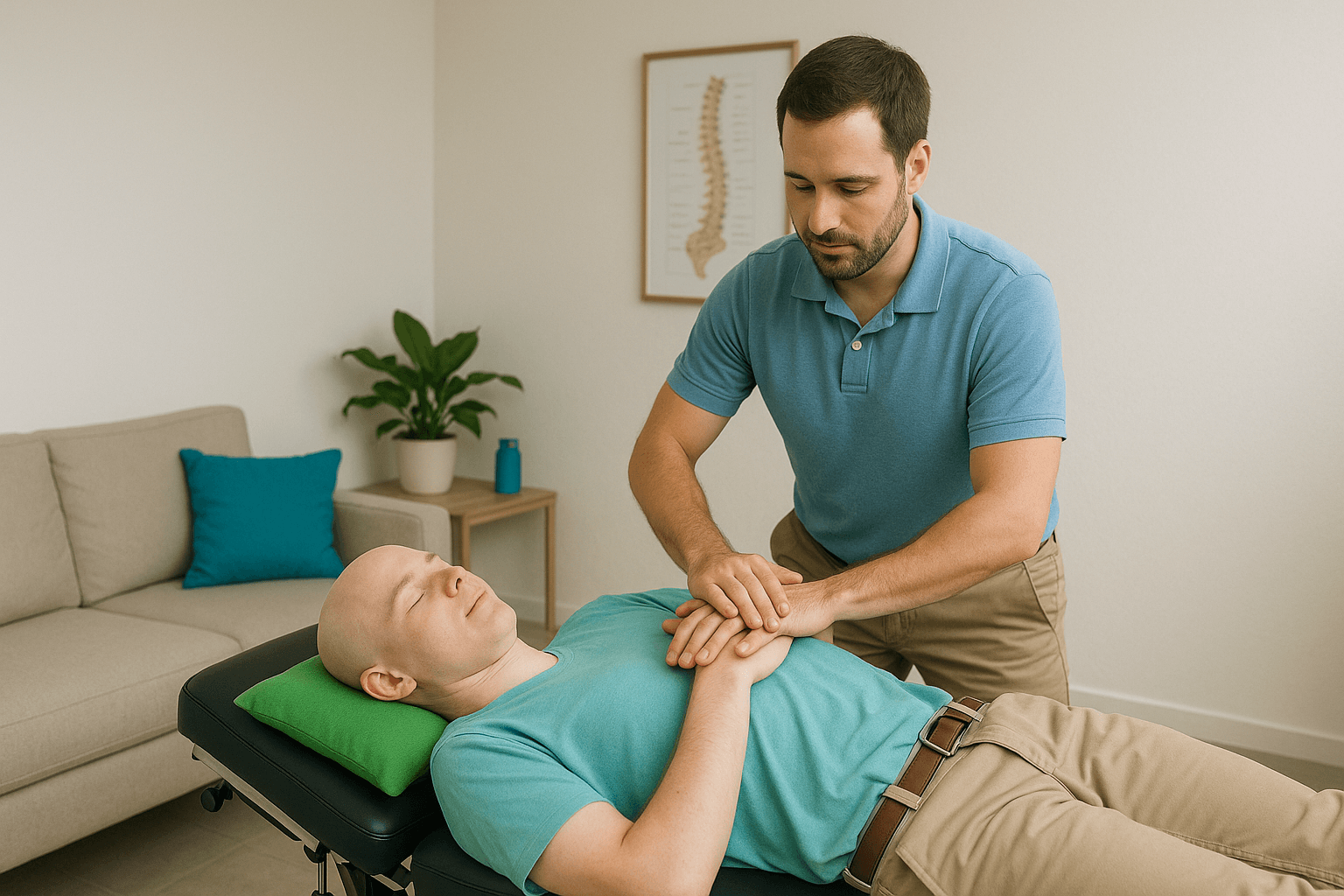
Because she could not stand or move easily, her chiropractor adjusted the way care was given. Instead of standard adjusting positions, she received treatment while lying down, with very gentle corrections designed for her specific needs. The care plan also included:
- Meningeal releases — special stretching methods to ease tension in the coverings of the spinal cord
- Spinal and postural corrections to improve balance and reduce strain
- Support worker training — her carers were shown how to position her more comfortably and make small changes in her environment to reduce unnecessary stress on her body
She began with twice-weekly visits, which later transitioned to weekly visits as she improved.
The Improvements She Experienced
The changes were not immediate, but within weeks, she and her carers began to notice important differences. Over several months, her progress was described as life-changing:
1. Pain Relief
Her constant neck, shoulder, and low back pain reduced significantly. Within the first three months, she was more comfortable sitting, lying down, and moving with assistance.
2. Less Muscle Spasticity
Her muscles became less rigid and easier to manage. This made daily tasks — such as lying flat, transferring from her chair, or even just sitting — much easier. Reducing spasticity also lowered the risk of cramps and painful spasms.
3. Better Balance and Posture
She gained more stability in her wheelchair and during transfers. This gave her carers more confidence when helping her, but it also gave her more confidence in her body.
4. Improved Continence
Perhaps the most remarkable change was a 70% improvement in urinary and bowel continence. This meant far fewer accidents and less reliance on carers for toileting. For her, this wasn’t just about convenience — it was about dignity, privacy, and independence.
5. Greater Independence
Because her pain decreased, her posture improved, and her continence got better, she was able to do more for herself. This reduced her dependence on others and gave her more freedom in her day-to-day life.
Why This Matters
For many people living with cerebral palsy, small improvements can add up to big changes in quality of life.
- Less pain means better sleep and mood.
- Fewer spasms mean easier caregiving and greater comfort.
- Improved continence means dignity, privacy, and independence.
- Better posture and balance mean reduced risk of falls or injuries during transfers.
This case is powerful because it shows that even when a lifelong condition cannot be cured, people can still see meaningful, life-changing progress.
How Advanced Biostructural Correction May Help
So, what makes ABC different from other approaches?
ABC is a chiropractic method that looks at posture and spinal structure in a very specific way. It identifies areas of the spine that are “stuck” in positions the body cannot fix on its own. Over time, these stuck areas can cause the body to collapse forward, leading to poor posture, strain, and pain.
By correcting these issues, ABC helps the body return to a more natural, upright alignment. For people with cerebral palsy, this may mean:
- Reduced spasticity by easing pressure on nerves and tissues
- Better posture while sitting or standing
- Less pain and stiffness in daily life
- Easier breathing and movement because the body is less collapsed forward
- Improved independence in everyday activities
Importantly, ABC care can be adapted to each person’s abilities and needs. In this case, adjustments were done lying down and were extremely gentle, making them safe and comfortable for someone with complex health needs.
Key Takeaways
Cerebral palsy is a lifelong condition, but that doesn’t mean people have to accept constant pain, spasticity, or loss of independence. This case study highlights how chiropractic care with Advanced Biostructural Correction helped one woman experience:
- Less pain
- Reduced spasms
- Improved continence
- Better balance
- Greater independence
For her, the improvements weren’t just physical — they restored confidence, dignity, and quality of life.
While more research is needed, this story shows that with the right approach, chiropractic care can make a real difference. For anyone living with CP or caring for a loved one, it offers hope that life can become more comfortable and independent, even after decades of challenges.
FAQs
1. Can chiropractic care help adults with cerebral palsy even if symptoms have lasted for decades?
Yes, adults with long-term CP symptoms can still benefit from chiropractic care. Structural improvements and symptom relief are possible even later in life. The key is finding a method like ABC™ that’s tailored to the individual’s needs and limitations.
2. Is chiropractic care safe for someone who can’t stand or walk independently?
Absolutely. In this case, all adjustments were performed while the patient was lying down, using gentle techniques. ABC™ care can be fully customized to match physical ability, ensuring comfort and safety.
3. How does posture correction improve continence?
Better posture reduces pressure on the spine and nervous system, which can influence bladder and bowel control. When the body is less collapsed forward, internal organs and pelvic floor muscles may function more effectively. In this case, continence improved by 70%.
4. Does ABC™ require a long-term commitment?
While long-term care can lead to deeper, lasting results, many patients notice improvements within the first few weeks or months. The care plan can be adjusted based on individual goals and responses. Regular follow-ups help maintain progress over time.
5. Can caregivers be involved in chiropractic care plans?
Yes, caregiver involvement is often encouraged. In this case, support workers were trained to improve positioning, reduce strain, and support the patient’s comfort outside of appointments. This collaboration can make care more effective and sustainable.